Wolf
The wolf is the most important predator of the temperate and boreal zones, prized by hunters for its intelligence, strength and the extreme challenge of hunting this wary and elusive pack hunter. It is characterized by a massive body build reaching weights of up to 80 kg, grayish-brown to black or whitish coloration depending on the region, powerful jaws capable of exerting pressure in excess of 1,500 PSI, and complex social behavior and hunting strategies. Hunting the wolf is one of the most controversial and challenging hunting experiences, available only in limited regions, requiring specialized tracking and baiting skills and knowledge of pack behavior, making this species the ultimate test for hunters who specialize in predators.
Wolf
All offers
 Bosnia and Herzegovina
Hunting map
Where do you hunt a wolf?
The wolf historically occurred throughout the northern hemisphere, although its range has drastically decreased due to persecution and habitat loss. Currently, the wolf inhabits Canada, Alaska, the northern states of the US (Montana, Idaho, Wyoming, Wisconsin, Michigan, Minnesota, Washington, Oregon), Mexico (Mexican wolf – reintroduced population), vast areas of Russia from western Russia to Siberia and the Far East, Mongolia, Kazakhstan, northwest China, the Scandinavian countries (Sweden, Norway, Finland), the Baltic countries (Estonia, Latvia, Lithuania), Poland, Belarus, Ukraine, Romania, Bulgaria, the Balkan countries, Italy, Spain, and Turkey, Iran, Israel and other areas of the Middle East. Canada offers the most accessible and diverse wolf hunting opportunities in the provinces of British Columbia, Alberta, Saskatchewan, Manitoba, Ontario and the Yukon Territories and Northwest Territories, where populations are stable and managed as a game species. Alaska provides hunting for the largest subspecies of wolf in extensive wilderness areas. Montana, Idaho and Wyoming offer strictly limited hunts within regulated seasons. Russia allows hunting in the vast taiga of Siberia, where the wolf is unprotected and can be hunted year-round in many regions. Kazakhstan and Mongolia offer steppe wolf hunts in spectacular Asian landscapes. Poland allows strictly limited wolf hunting under emergency shooting or special permits in regions where there are conflicts with livestock. All legal wolf hunting takes place under controversial and frequently changing regulations due to the species’ conservation status and disputes between conservationists and hunters.

Hunting calendar
When to hunt a wolf?
The wolf hunting season varies dramatically from jurisdiction to jurisdiction. In Canada and Alaska, the season typically runs from September to April, with winter (November-March) as the optimal time, when wolf fur is densest and most valuable, snow makes tracking easier, and wolves are more active in search of prey. In the northern states of the US, strictly limited seasons (where they are allowed) usually last from September to March. In Russia and Central Asia, hunting is possible year-round in many regions, although winter is preferred. In Poland and other European countries, hunting is usually carried out through contingency shooting without a specific time frame, reactively in response to conflicts. The wolf is primarily a nocturnal and twilight predator, most active during the night, although it can also hunt during the day, especially in winter in northern regions.
When planning a wolf hunt, be prepared for one of the most challenging, controversial and extremely difficult hunting experiences. The wolf is an apex predator with unparalleled intelligence, caution and hunting ability, living in complex social structures called packs of 2-3 to more than 20 individuals with a clear hierarchy. Hunting the wolf is carried out by a variety of methods – tracking in the snow with dogs or snowmobiles, voice baiting imitating howling packs, hunting over bait, night hunting with spotlights or thermal imaging (where permitted), and chance encounters while hunting other species. Wolves roam vast territories of hundreds of square kilometers, are extremely alert, have excellent sense of smell, hearing and vision, and avoid humans with an instinctive caution resulting from centuries of persecution. Locating packs requires extensive knowledge of the terrain, tracking tracks, listening for howls and working with local hunters or guides familiar with the territories. Shooting a wolf is extremely demanding – often taking place over long distances (200-400 meters), at a fast-moving target in difficult winter conditions. Universal calibers (.243 Win, .270 Win, .30-06, 7mm Rem Mag, .300 Win Mag) with precision ammunition are preferred. The wolf, despite its smaller size than large ungulates, is a sturdy animal requiring precise shooting. The ethical and legal aspects of wolf hunting are extremely controversial and complex – the species is the subject of intense controversy between hunters, farmers, conservationists and the public. In many regions the wolf is strictly protected (Western Europe, most of the US), while in others it is treated as a pest (Russia, some regions of Canada). Hunting must be conducted in full compliance with local regulations, which change frequently. In regions where they are allowed, wolf hunting is usually of a control nature, serving to reduce conflicts with breeding and management of ungulate populations. Wolf skin is a valuable trophy, especially winter hair of high density and quality. Hunting the wolf requires adherence to the highest ethical standards, awareness of the controversy and a deep respect for this legendary predator, which plays a key ecological role in ecosystems as a regulator of ungulate populations.
STY
LUT
MAR
KWI
MAJ
CZE
LIP
SIE
WRZ
PAŹ
LIS
GRU
Testimonies
The best hunt with us

See what customers who have hunted with us say about us.


Janusz K. - Polska

“The red deer hunt with The Hunting Hub was perfectly organized from start to finish. The hunting grounds were well chosen, the guides had excellent knowledge of the area and were very professional. The excitement during the rut and the quality of the trophy met all my expectations. I definitely recommend it.”
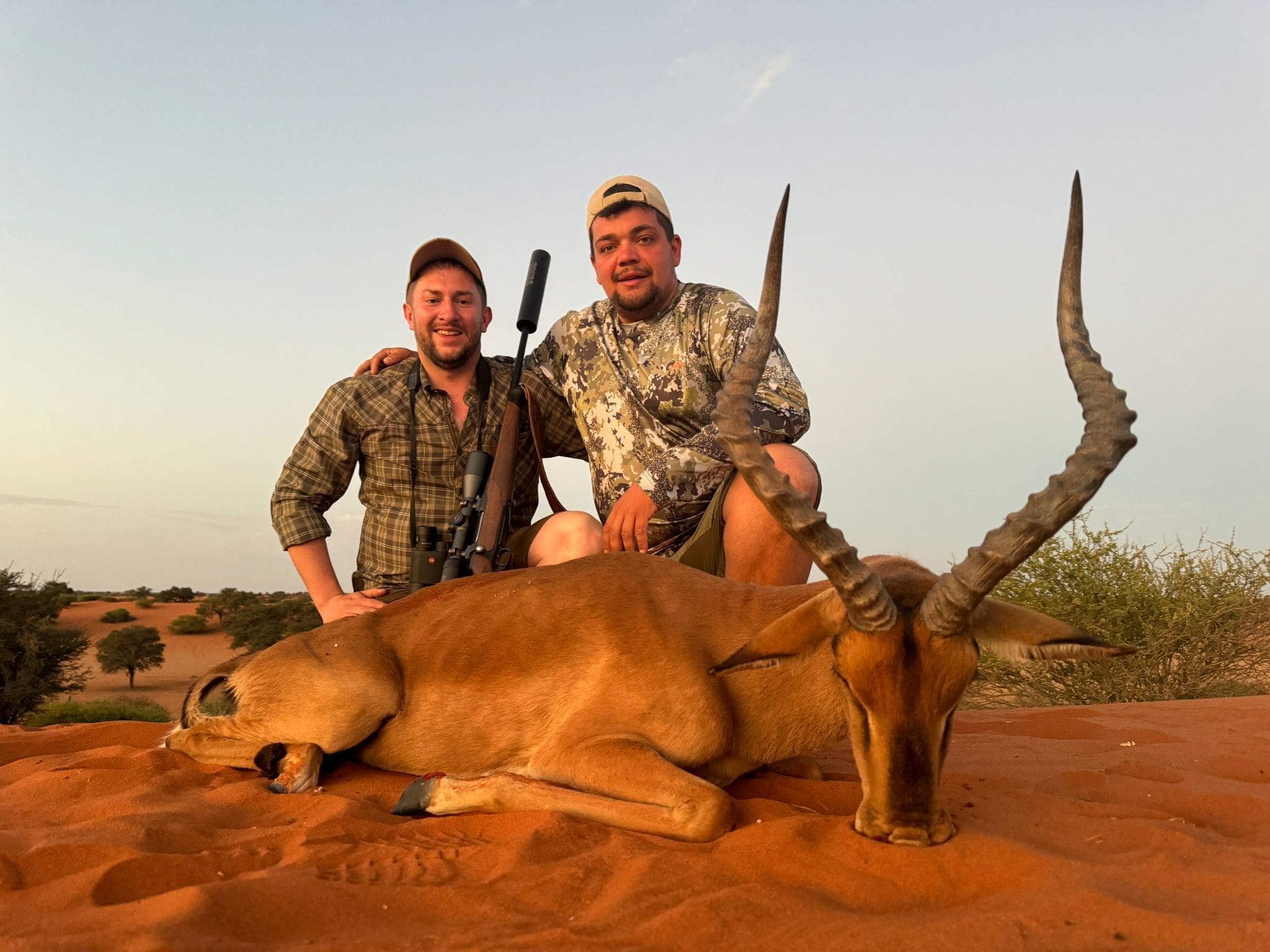
Arkadiusz Malarczyk "The trip to Namibia with The Hunting Hub exceeded my expectations. Impala, oryx, and other African species in their natural habitat, excellent logistics, and the vast knowledge of the local PHs. It was a real adventure of a lifetime, and definitely not my last trip to Africa."
Michael Schmiele - Germany
The roebuck hunt during the rut was perfectly timed and professionally guided. Great knowledge of the area and animal behavior resulted in real hunting opportunities. The Hunting Hub proved to be a reliable and highly professional outfitter.”
Jonathan - DaniaaJonathan - Denmark
An der von The Hunting Hub organisierten Drückjagd teilzunehmen war ein echtes Highlight. Hervorragende Organisation, hohe Sicherheitsstandards und außergewöhnlich viel Wild auf den Treiben
Peter Veerland - Netherlands
De muflonenjacht in Tsjechië met The Hunting Hub was een uitzonderlijke ervaring. Prachtige bergachtige jachtgebieden, sterke populaties muflons en zeer professionele begeleiding. Alles was perfect georganiseerd en het niveau van de jacht was bijzonder hoog. Absoluut een aanrader voor elke veeleisende jager
Contact
Contact us and ask about hunting with The Hunting Hub
Are you looking for an unforgettable hunting trip? Contact us via the form or by email/phone. We will listen to your needs and create the best offer for you.
We are here to answer your questions

Jakub Filip Jabłoński DE / ENG / POL
CEO of The Hunting Hub
 contact@thehuntinghub.com
 +48 570 731 282
 Warsaw, Poland
01
Fill out the form
02
We will call you back within 24 hours
03
We will discuss your requirements
04
We will present you with an offer
 We will go on an adventure
Animal species