Bear
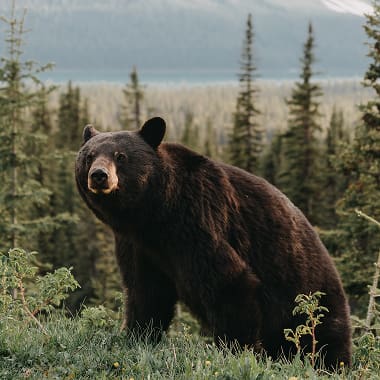
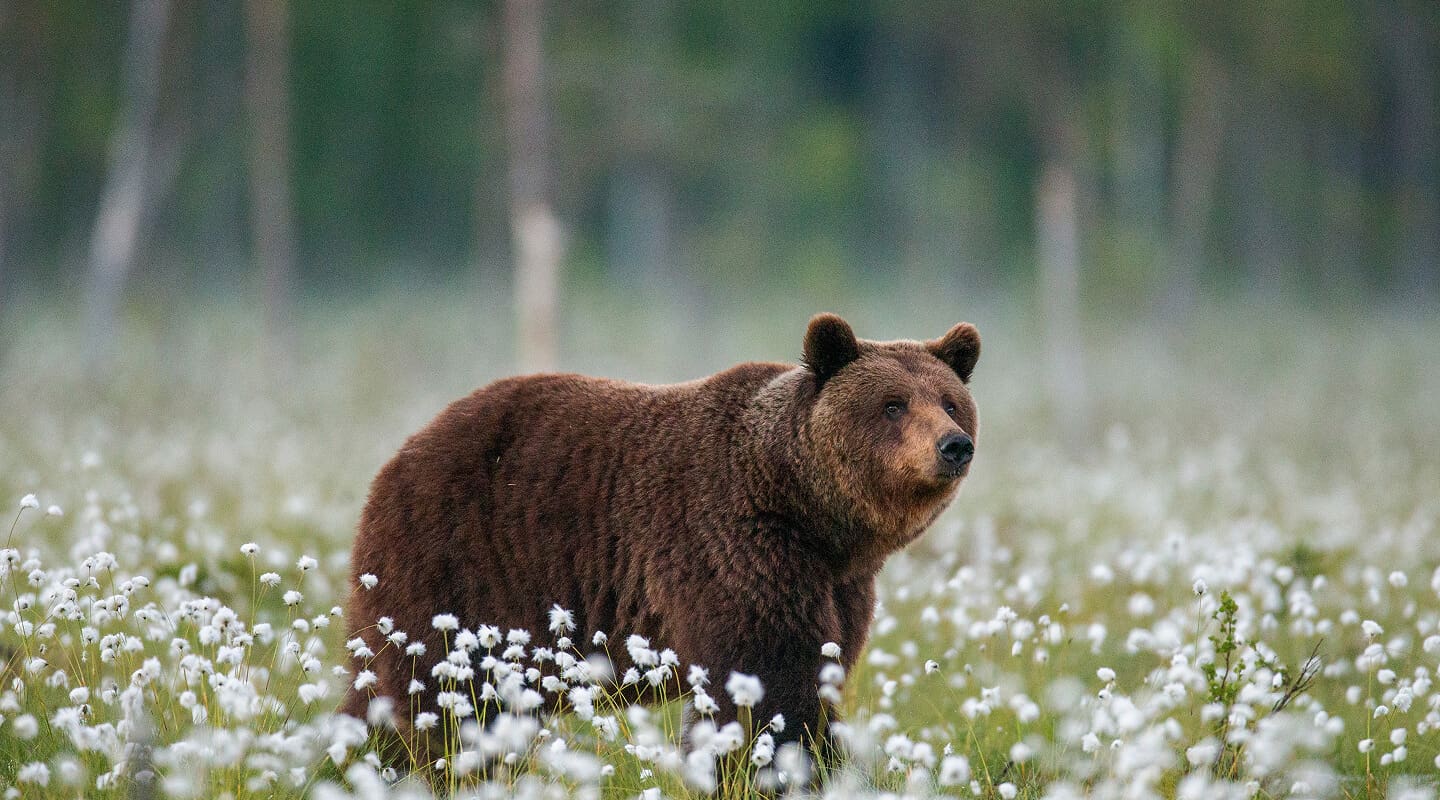
The bear is one of the most iconic and prestigious hunting objects in the world, prized by hunters for its monumental size, strength and the extreme challenge and danger of hunting this powerful predator. It is characterized by a massive body structure reaching weights of 100 to over 700 kg depending on the species, powerful limbs with sharp claws, a variety of coloration from black through brown to white, and exceptional intelligence and unpredictable behavior. Bear hunting is one of the most challenging and dangerous hunting experiences, requiring courage, excellent shooting skills, knowledge of the species’ behavior and the awareness that a wounded bear is one of the most dangerous animals for a hunter.
Bear
All offers
 Bosnia and Herzegovina
Hunting map
Where do you hunt a bear?
Bears come in several species distributed across North America, Europe and Asia. The brown bear (Ursus arctos) inhabits Alaska, Canada (British Columbia, Alberta, Yukon, Northwest Territories), the northwestern states of the USA (Montana, Wyoming, Idaho, Washington), Russia (from western Russia to Siberia and Kamchatka), Scandinavian countries (Sweden, Finland, Norway), the Baltic States, Poland, Slovakia, Romania, Bulgaria, the Balkan countries, Spain, Italy and vast areas of Central Asia, Mongolia and Tibet. The black bear (Ursus americanus) is found in Canada and the US from Alaska to Mexico. The polar bear (Ursus maritimus) inhabits the Arctic regions of Canada, Alaska, Greenland, Norway (Svalbard) and Russia. Canada offers the most diverse black and brown bear hunting opportunities in the provinces of British Columbia, Alberta, Saskatchewan, Manitoba, Ontario, Quebec and the Northern Territories. Alaska provides spectacular hunts for the largest subspecies of brown bear (Kodiak, Alaska Peninsula brown bear) and black bear. Russia provides brown bear hunting in vast areas of taiga and Kamchatka, where some of the largest individuals in the world are found. Romania offers well-organized Carpathian brown bear hunts in the Carpathian Mountains, although regulations are restrictive. Sweden, Finland and Norway provide hunts in the boreal forests of Scandinavia. Poland allows extremely limited brown bear hunts as part of contingency shooting in the Tatra Mountains and Bieszczady Mountains. All bear hunts are conducted under strictly controlled limits and high fees due to the conservation status of most populations.

Hunting calendar
When to hunt a bear?
The bear hunting season varies widely by species, region and regulation. In North America, the black bear season typically lasts in spring (April-June) and fall (September-November), with spring being preferred by many hunters due to the bears’ post-winter dormancy activity and high skin quality. Autumn offers bears in peak condition before hibernation. The brown bear season in Canada and Alaska typically runs in spring (April-June) and fall (September-October). In Russia, the season runs from spring to autumn (April-November) in most regions, with spring as the optimal time. In Europe, seasons are strictly limited and vary from country to country – traditionally autumn and winter (now very limited) in Romania, September-October in Scandinavia. Bears are mainly active during dusk, night and early morning, although in spring, after emerging from their roost, they may also be active during the day.
When planning a bear hunt, be prepared for one of the most dangerous and challenging hunting experiences in the world. Bears are omnivorous predators with unpredictable behavior, tremendous physical strength and the ability to inflict fatal injuries. Hunting is carried out using a variety of methods – spring hunting over baits (baiting) in North America, where bears are attracted to the scent of food for weeks before the hunt; hunting with tracking dogs that locate and stop bears; stalking in difficult mountain and forest terrain; hunting from boats along riverbanks and coastlines in Alaska; and hunting from lookouts. Working with the best professional guides is absolutely crucial for safety – bears are unpredictable, and a wounded individual can instantly attack a hunter at speeds of up to 55 mph. Bear shooting requires strong calibers – a minimum of .30-06, preferred .338 Win Mag, .375 H&H, .416 Rigby or larger for brown and polar bears, with premium ammunition for deep penetration. Distances typically range from 50 to 200 meters, with preferred broadside shots to the vital zone behind the shoulder blade or to the shoulder. The bear is an extremely resilient animal capable of fighting back even after multiple hits. A backup shot from the handler is standard safety practice. The ethical and legal aspects are extremely complex – most bear populations are protected or strictly managed, hunting is the subject of intense controversy, and regulations change frequently. In Europe, the brown bear is strictly protected in most countries. All hunting requires adherence to the highest ethical standards and full compliance with local regulations. A bear skin is among the most prestigious trophies in world hunting. Bear hunting is the experience of a lifetime, combining extreme danger with the prestige of capturing one of the world’s most powerful predators, requiring courage, skill and a deep respect for the strength and majesty of this legendary animal.
STY
LUT
MAR
KWI
CZE
LIP
SIE
WRZ
PAŹ
GRU
Testimonies
The best hunt with us

See what customers who have hunted with us say about us.


Janusz K. - Polska

“The red deer hunt with The Hunting Hub was perfectly organized from start to finish. The hunting grounds were well chosen, the guides had excellent knowledge of the area and were very professional. The excitement during the rut and the quality of the trophy met all my expectations. I definitely recommend it.”
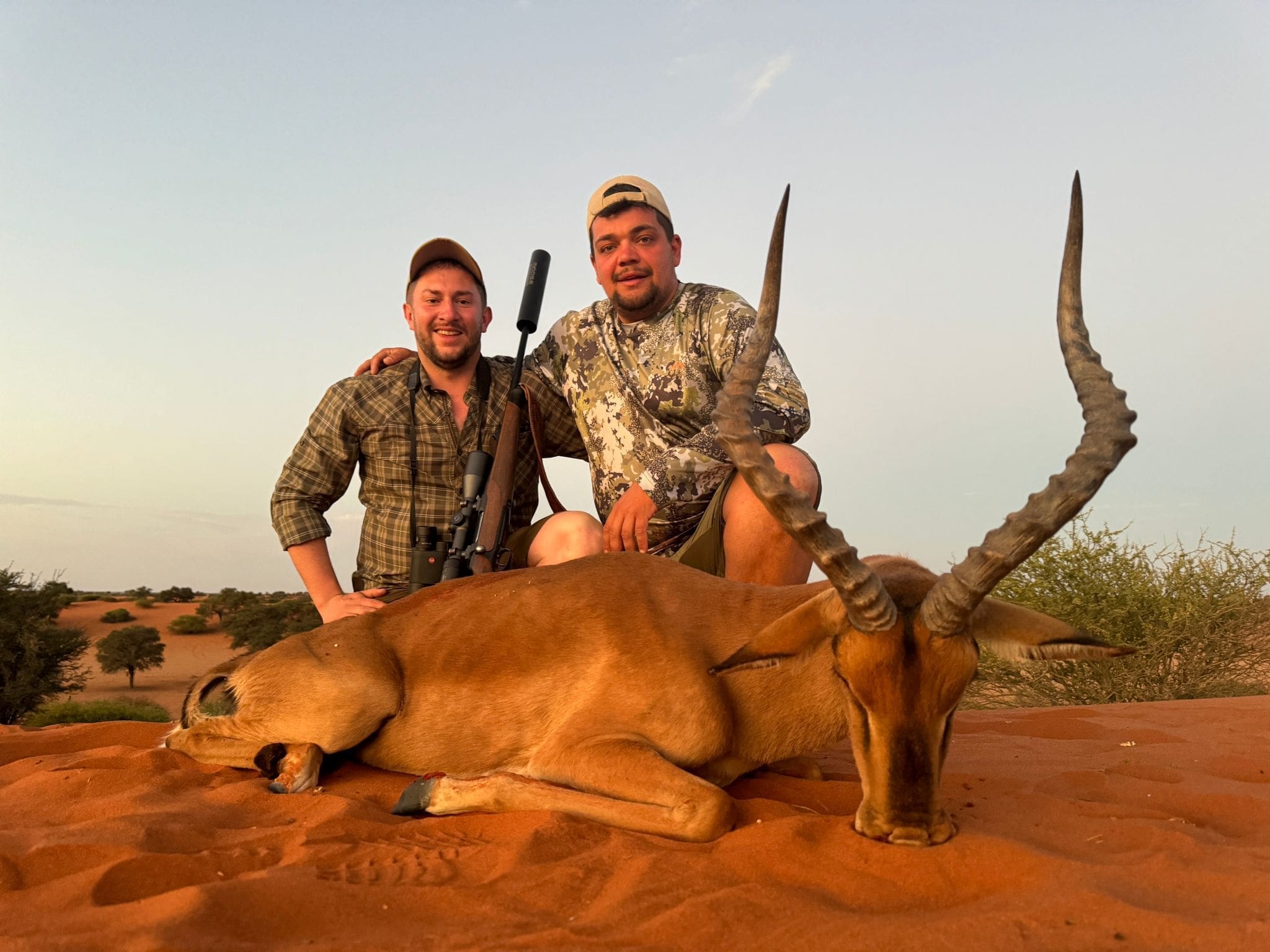
Arkadiusz Malarczyk "The trip to Namibia with The Hunting Hub exceeded my expectations. Impala, oryx, and other African species in their natural habitat, excellent logistics, and the vast knowledge of the local PHs. It was a real adventure of a lifetime, and definitely not my last trip to Africa."
Michael Schmiele - Germany
The roebuck hunt during the rut was perfectly timed and professionally guided. Great knowledge of the area and animal behavior resulted in real hunting opportunities. The Hunting Hub proved to be a reliable and highly professional outfitter.”
Jonathan - DaniaaJonathan - Denmark
An der von The Hunting Hub organisierten Drückjagd teilzunehmen war ein echtes Highlight. Hervorragende Organisation, hohe Sicherheitsstandards und außergewöhnlich viel Wild auf den Treiben
Peter Veerland - Netherlands
De muflonenjacht in Tsjechië met The Hunting Hub was een uitzonderlijke ervaring. Prachtige bergachtige jachtgebieden, sterke populaties muflons en zeer professionele begeleiding. Alles was perfect georganiseerd en het niveau van de jacht was bijzonder hoog. Absoluut een aanrader voor elke veeleisende jager
Contact
Contact us and ask about hunting with The Hunting Hub
Are you looking for an unforgettable hunting trip? Contact us via the form or by email/phone. We will listen to your needs and create the best offer for you.
We are here to answer your questions

Jakub Filip Jabłoński DE / ENG / POL
CEO of The Hunting Hub
 contact@thehuntinghub.com
 +48 570 731 282
 Warsaw, Poland
01
Fill out the form
02
We will call you back within 24 hours
03
We will discuss your requirements
04
We will present you with an offer
 We will go on an adventure
Animal species