Klipspringer
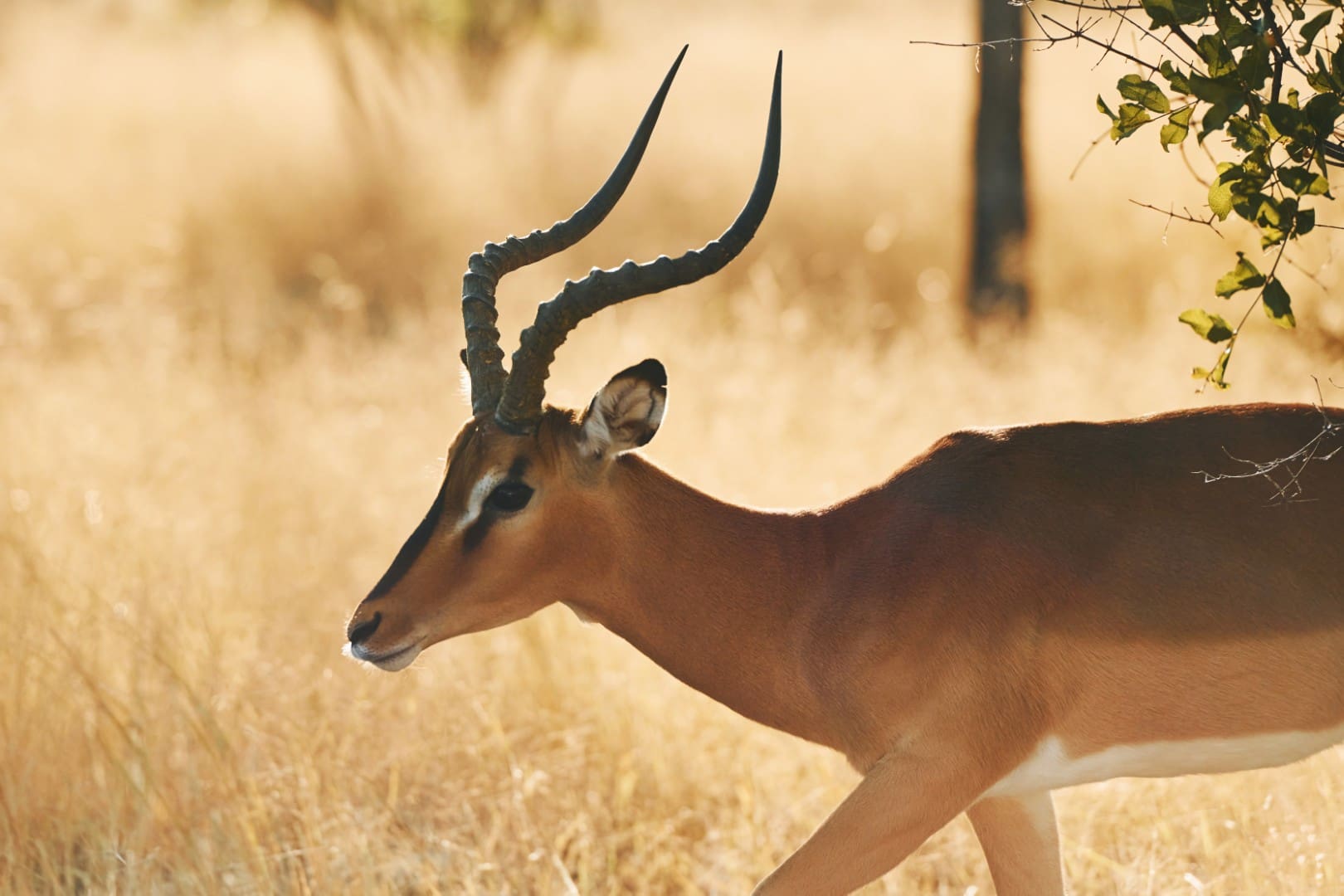
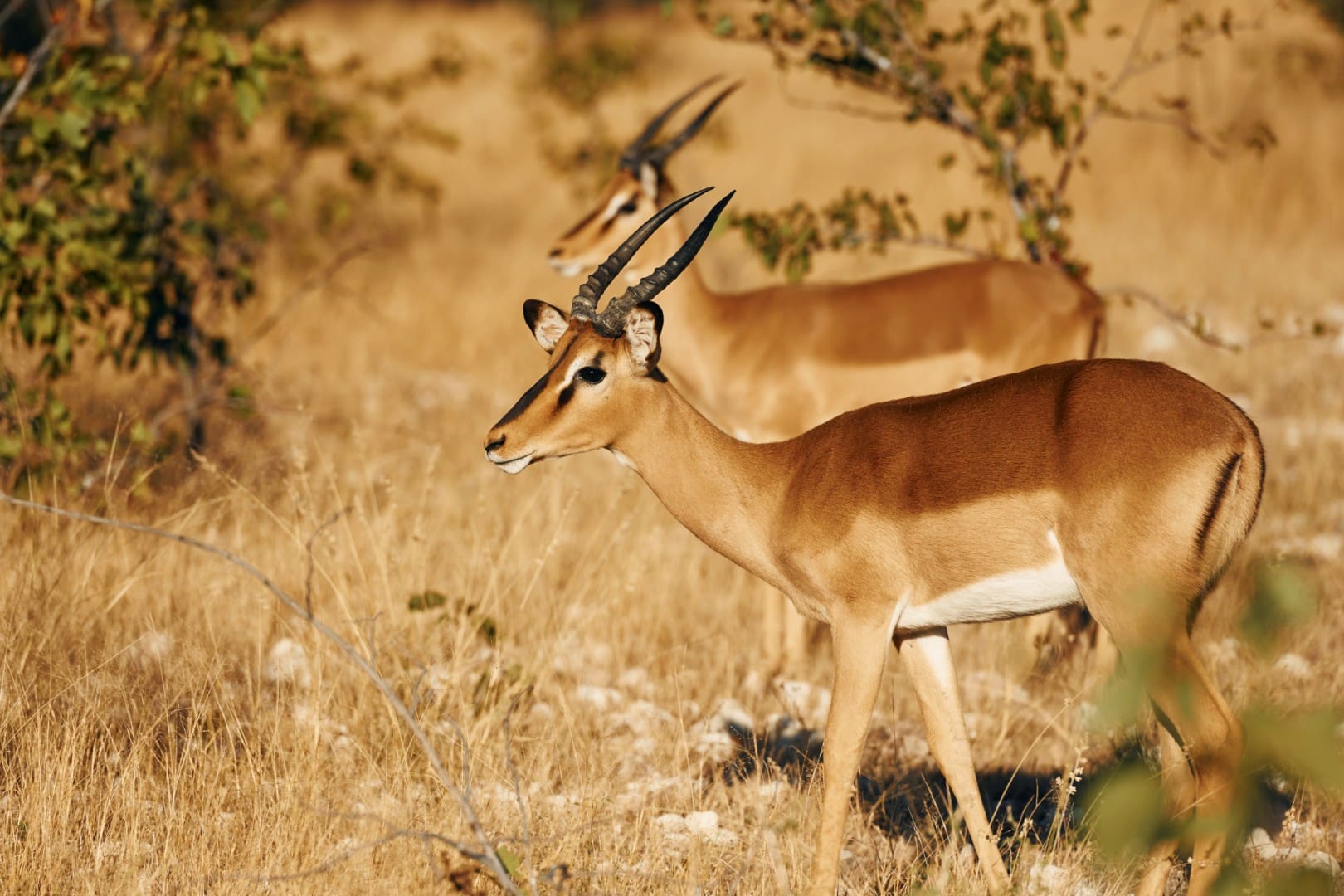
The Klipspringer is a miniature rock antelope, prized by hunters for its remarkable ability to navigate steep rocky slopes and its trophy uniqueness. It is characterized by its small size (height at withers 45-60 centimeters, body weight 10-18 kilograms), thick, coarse coat in shades of grayish-greenish-brown with a yellowish tinge, short, straight horns in males (rarely in females) reaching 7-15 centimeters in length, and unique hooves with rubbery, non-slip pads that allow it to move over rocks. Hunting the klipspringer is one of the most physically demanding hunting experiences, requiring excellent mountain fitness, the ability to shoot accurately at angles, and patience in locating these masters of rock camouflage.
Klipspringer
All offers
 Kalahari
Hunting map
Where do you hunt for a clipspringer?
Klipspringer is found in an extensive range covering eastern, southern and northeastern areas of Africa wherever rock formations, mountains and cliffs are present. The species inhabits Ethiopia, Eritrea, Somalia, Sudan, South Sudan, Kenya, Tanzania, Uganda, Rwanda, Zambia, Malawi, Mozambique, Zimbabwe, Botswana, Namibia, Angola, South Africa and isolated populations in Nigeria, Cameroon and Central African Republic. South Africa offers excellent klipspringer hunting opportunities in the Eastern Cape, Northern Cape, Limpopo, Mpumalanga and KwaZulu-Natal provinces, where it is found in the Drakensberg, Karoo, Waterberg and other rock formations. Namibia provides spectacular hunting in the mountainous regions of Erongo, Waterberg, Brandberg and Kaokoland with dramatic rock landscapes and high quality trophies. Zimbabwe offers hunts in the mountainous Matopos, Eastern Highlands and other rock formations with professional guiding. Tanzania allows klipspringer hunting in mountainous regions and rocky hunting areas like Ruaha and the northern concessions. Zambia offers hunting in valleys with rock formations. Ethiopia provides hunting in spectacular mountainous eastern landscapes. All of these destinations combine the presence of rock formations and mountain habitats favored by the clippspringer, the opportunity to hunt in dramatic landscapes, and the capture of a unique trophy of miniature rock antelope as part of a comprehensive African safari.

Hunting calendar
When to hunt for a clipspringer?
The hunting season for the klipspringer in most countries lasts year-round where the species is available for hunting. In South Africa and Namibia, the optimal period is during the drier and cooler months from April to September, when weather conditions in the mountains are safest and most comfortable. Early autumn and winter, especially from May to August, offer stable weather conditions, minimal rainfall, good visibility and active animals. Avoid the rainy season, when rocks become slippery and dangerous, and fog and clouds reduce visibility in mountainous terrain. In Tanzania and East Africa, the optimal period is the dry seasons from June to October and December to March. The Klipspringer is mainly active during the early mornings and late afternoons, resting in the shade of rock crevices and under overhangs during peak heat, often standing motionless on exposed rocks observing the surroundings from panoramic vantage points.
When planning a klipspringer hunt, be prepared for one of the most physically and technically demanding hunting experiences in Africa. The klipspringer is a true rock specialist, inhabiting only mountainous areas, rock mounds, cliffs and granite formations, where its unparalleled climbing skills give it an advantage over predators. It navigates steep, seemingly inaccessible rock surfaces with grace and confidence, leaping between rocks on its unique hooves. Klipspringers live in monogamous pairs occupying small rock territories, staying together throughout their lives and cooperating to watch for threats. Hunting requires hours of climbing steep slopes, often at altitudes exceeding 2,000 meters, in difficult terrain with loose rocks. Excellent physical condition and lack of fear of heights are absolutely essential. Working with an experienced professional hunter (PH) and trackers familiar with the rocky terrain is crucial for safety and success. The Klipspringer has excellent eyesight, and its coloration blends in perfectly with the gray of the rocks. Location requires careful scanning of rock formations through binoculars, often for hours. Shooting is extremely demanding – small target size, shooting at large vertical angles, windy mountain conditions and unstable shooting positions. Distances typically range from 100 to 250 meters, and light calibers (.243 Win, .270 Win, 7mm-08) with precision ammunition are preferred. Ethical aspects of the hunt are uncontroversial – the species has stable populations and is managed as a game species. Hunting focuses on males recognizable by their horns. Klipspringer hunting combines mountaineering with hunting and offers one of the most challenging experiences in Africa’s spectacular mountain landscapes.
Testimonies
The best hunt with us

See what customers who have hunted with us say about us.


Janusz K. - Polska

“The red deer hunt with The Hunting Hub was perfectly organized from start to finish. The hunting grounds were well chosen, the guides had excellent knowledge of the area and were very professional. The excitement during the rut and the quality of the trophy met all my expectations. I definitely recommend it.”
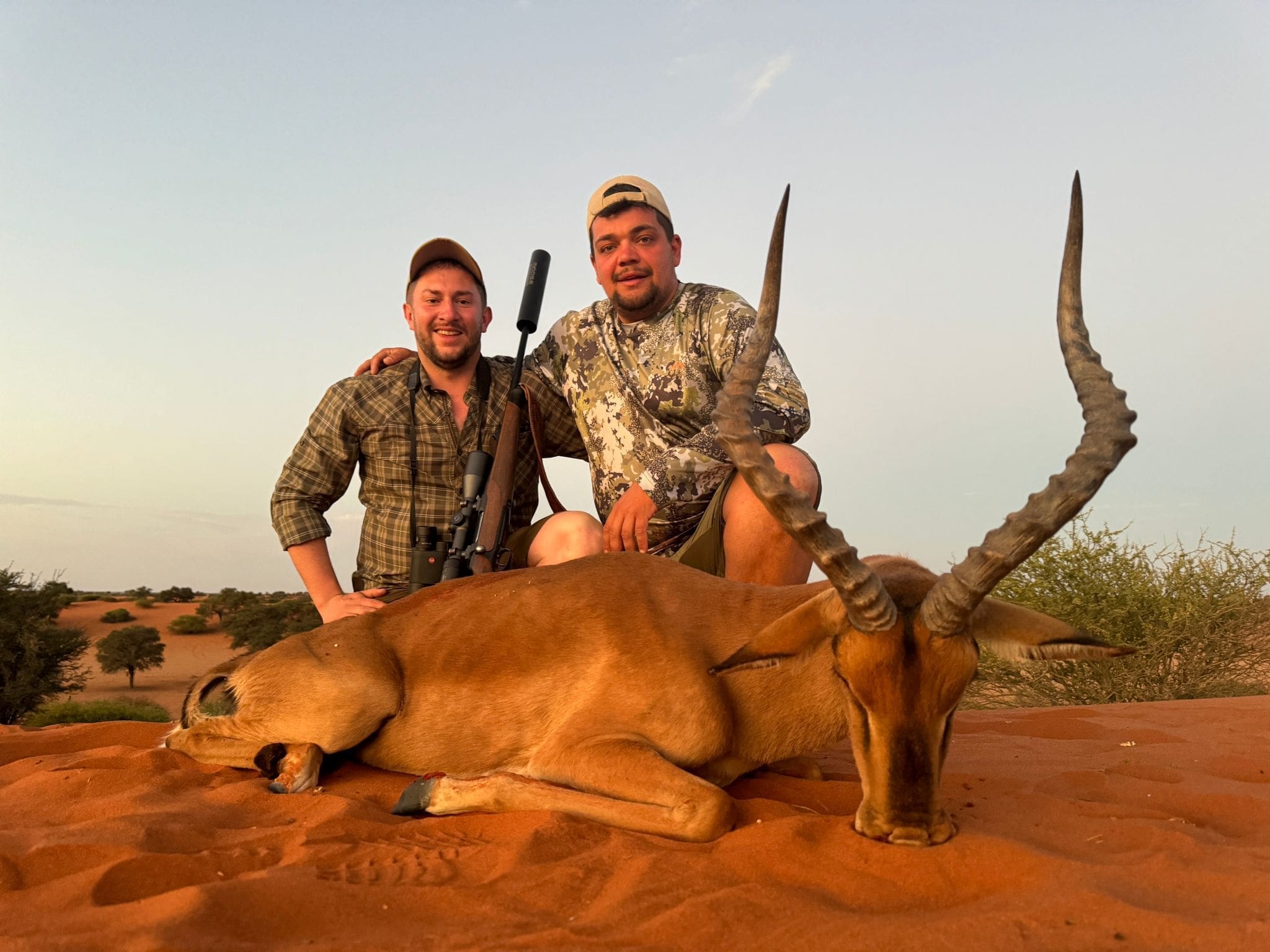
Arkadiusz Malarczyk "The trip to Namibia with The Hunting Hub exceeded my expectations. Impala, oryx, and other African species in their natural habitat, excellent logistics, and the vast knowledge of the local PHs. It was a real adventure of a lifetime, and definitely not my last trip to Africa."
Michael Schmiele - Germany
The roebuck hunt during the rut was perfectly timed and professionally guided. Great knowledge of the area and animal behavior resulted in real hunting opportunities. The Hunting Hub proved to be a reliable and highly professional outfitter.”
Jonathan - DaniaaJonathan - Denmark
An der von The Hunting Hub organisierten Drückjagd teilzunehmen war ein echtes Highlight. Hervorragende Organisation, hohe Sicherheitsstandards und außergewöhnlich viel Wild auf den Treiben
Peter Veerland - Netherlands
De muflonenjacht in Tsjechië met The Hunting Hub was een uitzonderlijke ervaring. Prachtige bergachtige jachtgebieden, sterke populaties muflons en zeer professionele begeleiding. Alles was perfect georganiseerd en het niveau van de jacht was bijzonder hoog. Absoluut een aanrader voor elke veeleisende jager
Contact
Contact us and ask about hunting with The Hunting Hub
Are you looking for an unforgettable hunting trip? Contact us via the form or by email/phone. We will listen to your needs and create the best offer for you.
We are here to answer your questions

Jakub Filip Jabłoński DE / ENG / POL
CEO of The Hunting Hub
 contact@thehuntinghub.com
 +48 570 731 282
 Warsaw, Poland
01
Fill out the form
02
We will call you back within 24 hours
03
We will discuss your requirements
04
We will present you with an offer
 We will go on an adventure
Animal species