Leopard
The leopard is one of Africa’s most prestigious and elusive predators, prized by hunters as the pinnacle of their hunting careers due to its intelligence, strength and extreme hunting difficulty. It is characterized by its muscular physique, golden coloration covered with distinctive black rosettes, powerful jaws capable of dragging prey into trees, and unparalleled ability to sneak and hunt at night. Leopard hunting is one of the elements of the classic African Big Five, requiring specialized night hunting or over bait skills, extreme patience and precision shooting under stressful conditions, making leopard capture the ultimate test of a hunter’s skills.
All offers
We currently do not have offers in this category, but all is not lost!
Contact us and we will try to organize your dream hunt for you.
We are here to answer your questions
Jakub Filip Jabłoński
CEO of The Hunting Hub
 contact@thehuntinghub.com
 +48 570 731 282
 Warszawa, Polska
Where do you hunt leopard?
The leopard has the widest geographic range of any big cat, inhabiting sub-Saharan Africa and vast areas of Asia. In Africa, the species is found in virtually all countries except the Sahara and some desert areas, covering Tanzania, Zambia, Zimbabwe, Mozambique, Botswana, Namibia, Angola, South Africa, Kenya, Uganda, Ethiopia, South Sudan, Central African Republic, Cameroon, Congo and isolated populations in West Africa. In Asia, the leopard is found in India, Sri Lanka, Nepal, Bhutan, Burma, Thailand, Malaysia, Indonesia, China, Far East Russia, Iran, Turkey, the Caucasus and the Middle East, although many Asian populations are critically endangered. Tanzania offers classic leopard hunting in renowned safari areas like Selous, Ruaha, Moyowosi and Maswa, where the species is abundant and spectacular trophy males weighing more than 80 kg are possible. Zimbabwe is famous for its excellent leopard hunting in Save Valley, Matetsi, Chewore and the Zambezi Valley with a long tradition of professional population management. Zambia provides hunting in the Luangwa and Kafue valleys, which are considered some of the best leopard areas in Africa. South Africa offers hunts in the Limpopo and Northern Cape provinces, although availability is limited due to quotas. Namibia allows hunting in selected concessions. Botswana has banned commercial hunting, as does Kenya. All legal leopard hunts take place within strictly controlled limits and permits issued based on scientific population assessments, with high costs and long waiting periods for permits.

When to hunt leopard?
The leopard hunting season in African countries varies by region. In Tanzania, the main season runs from July to October and January to March, with July, August and September as the optimal time when conditions are dry and leopards are actively hunting. Zimbabwe and Zambia offer the best hunting from May to October during the dry season, especially from June to August, when leopards are concentrated around water sources and their activity is most predictable. In South Africa, the optimal period is the winter months from May to August. The leopard is primarily a nocturnal predator, most active from dusk to dawn, although in areas with low human pressure it may also hunt during the day. Typical leopard hunts begin in the late afternoon with bait and chattel preparation, continuing through dusk and night into the early morning hours.
When planning a leopard hunt, be prepared for one of the most mentally, technically and financially demanding hunting experiences. The leopard is an apex predator of unparalleled intelligence, caution and hunting ability, hunting prey ranging from rodent size to young antelope and monkeys alone. Hunting is done almost exclusively by waiting over bait – professional hunters prepare baits in the form of impala or other antelope placed in trees in known leopard territories, often holding several baits at once for days or weeks. When the leopard begins to feed regularly on the bait (which can be confirmed by tracks and remains), the hunters build a carefully camouflaged lookout at a suitable distance (usually 60-100 meters) from the bait. In the evening, the hunter takes up position in the chattel a few hours before dusk, remaining in absolute silence and stillness for hours in anticipation of the appearance of the leopard. The appearance is unpredictable and instantaneous – the leopard materializes like a ghost, often without any warning. Shooting is done in the dim light of twilight or with minimal illumination by a red lamp, at a partially obscured target among the branches of a tree, under extremely stressful conditions with adrenaline and awareness of danger. The distance is relatively close (60-120 meters), but precision must be absolute – the vital zone is small, and a wounded leopard is one of the most dangerous animals in Africa, capable of attacking the hunter in a flash. Preference is given to medium to more powerful calibers (.300 Win Mag, .338, .375 H&H) with premium ammunition for instant stopping. Cooperation with the best professional hunters (PHs) who specialize in leopards is absolutely crucial – their experience in locating territories, preparing bait, building lookouts and judging the timing of a shot often determines the success or failure of a multi-week expedition. The ethical and legal aspects of leopard hunting are extremely complex – the species is on CITES Appendix I, which requires special export and import permits, and many countries have drastically restricted or banned hunting. Tanzania, Zimbabwe and Zambia maintain tightly controlled hunting programs based on scientific population assessments, where high permit fees (often $10,000-$15,000+) fund conservation of the species and anti-poaching. All legal hunting requires selectivity – shooting focuses on mature males already past their reproductive peak, recognizable by their massive stature, broad skull and thick paws. The leopard provides one of the most spectacular and prestigious trophies in world hunting – solid preparations perfectly capture the elegance and power of this predator. Hunting leopard requires adherence to the highest standards of ethics, patience counted in weeks, readiness for multiple failures and a deep respect for this legendary predator, the capture of which is considered the pinnacle achievement in the career of any professional African hunter.
The best hunt with us

See what customers who have hunted with us say about us.


Janusz K. - Polska

“The red deer hunt with The Hunting Hub was perfectly organized from start to finish. The hunting grounds were well chosen, the guides had excellent knowledge of the area and were very professional. The excitement during the rut and the quality of the trophy met all my expectations. I definitely recommend it.”
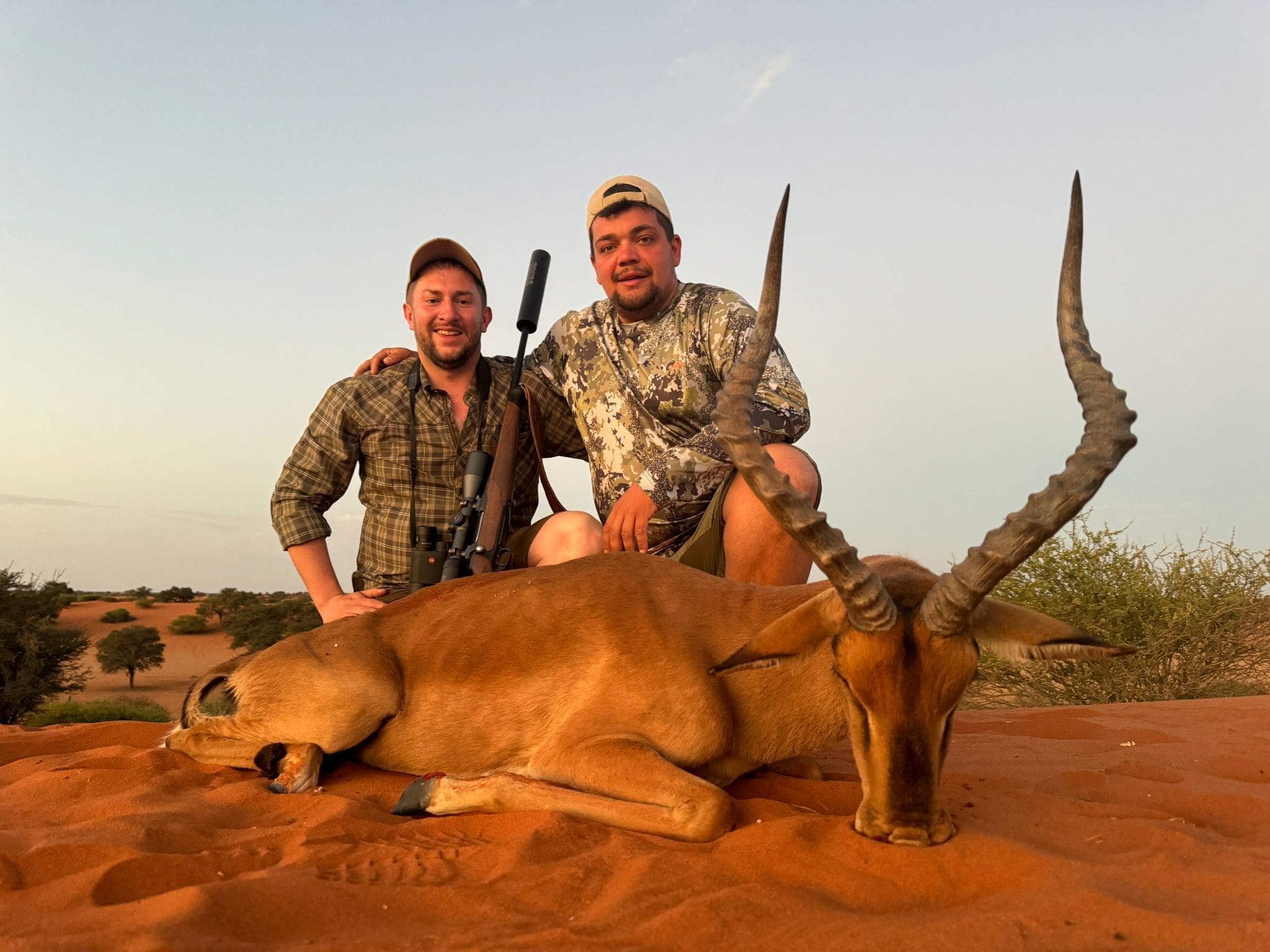
Arkadiusz Malarczyk "The trip to Namibia with The Hunting Hub exceeded my expectations. Impala, oryx, and other African species in their natural habitat, excellent logistics, and the vast knowledge of the local PHs. It was a real adventure of a lifetime, and definitely not my last trip to Africa."
Michael Schmiele - Germany
The roebuck hunt during the rut was perfectly timed and professionally guided. Great knowledge of the area and animal behavior resulted in real hunting opportunities. The Hunting Hub proved to be a reliable and highly professional outfitter.”
Jonathan - DaniaaJonathan - Denmark
An der von The Hunting Hub organisierten Drückjagd teilzunehmen war ein echtes Highlight. Hervorragende Organisation, hohe Sicherheitsstandards und außergewöhnlich viel Wild auf den Treiben
Peter Veerland - Netherlands
De muflonenjacht in Tsjechië met The Hunting Hub was een uitzonderlijke ervaring. Prachtige bergachtige jachtgebieden, sterke populaties muflons en zeer professionele begeleiding. Alles was perfect georganiseerd en het niveau van de jacht was bijzonder hoog. Absoluut een aanrader voor elke veeleisende jager
Contact us and ask about hunting with The Hunting Hub
Are you looking for an unforgettable hunting trip? Contact us via the form or by email/phone. We will listen to your needs and create the best offer for you.
We are here to answer your questions
Jakub Filip Jabłoński DE / ENG / POL
CEO of The Hunting Hub
 We will go on an adventure