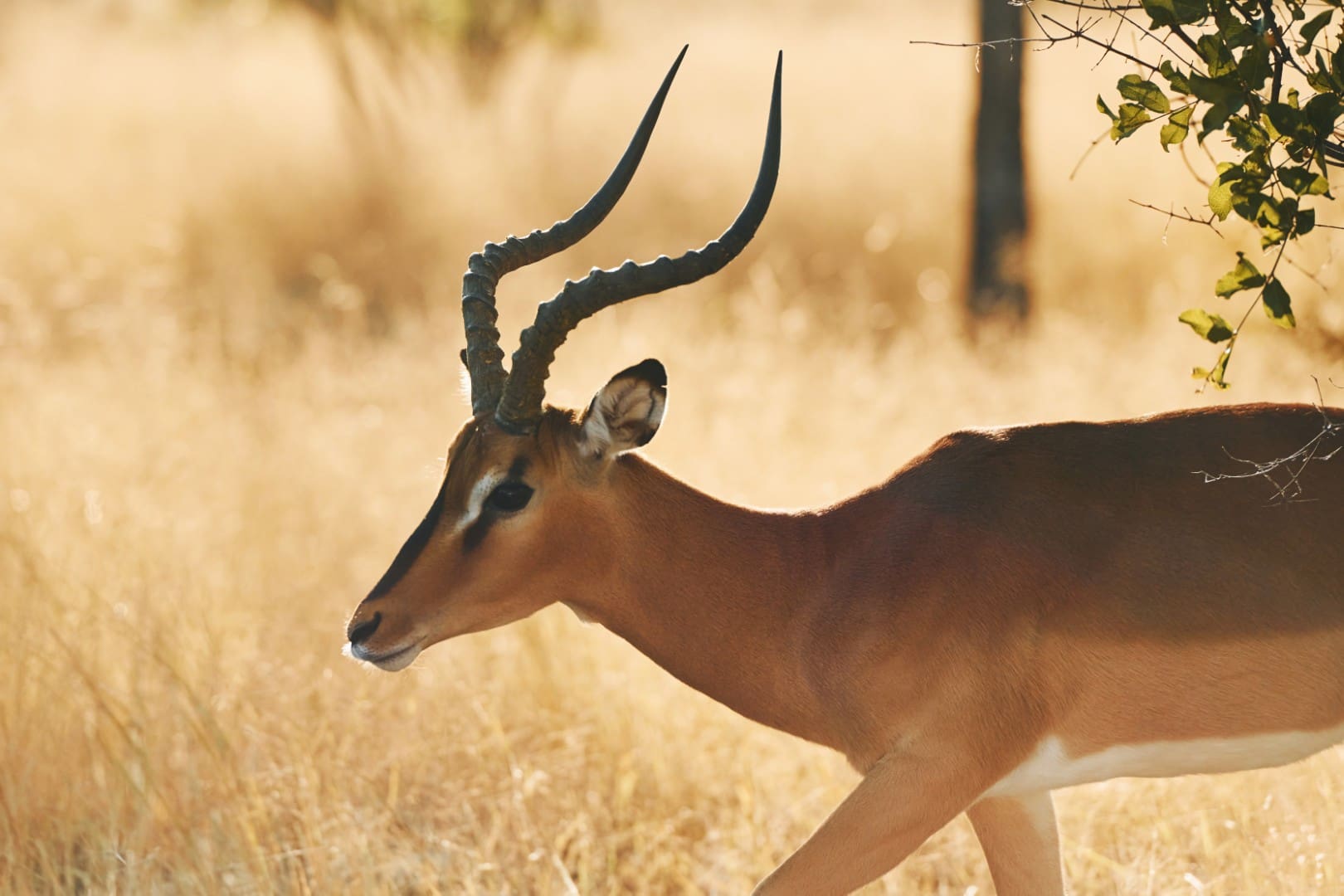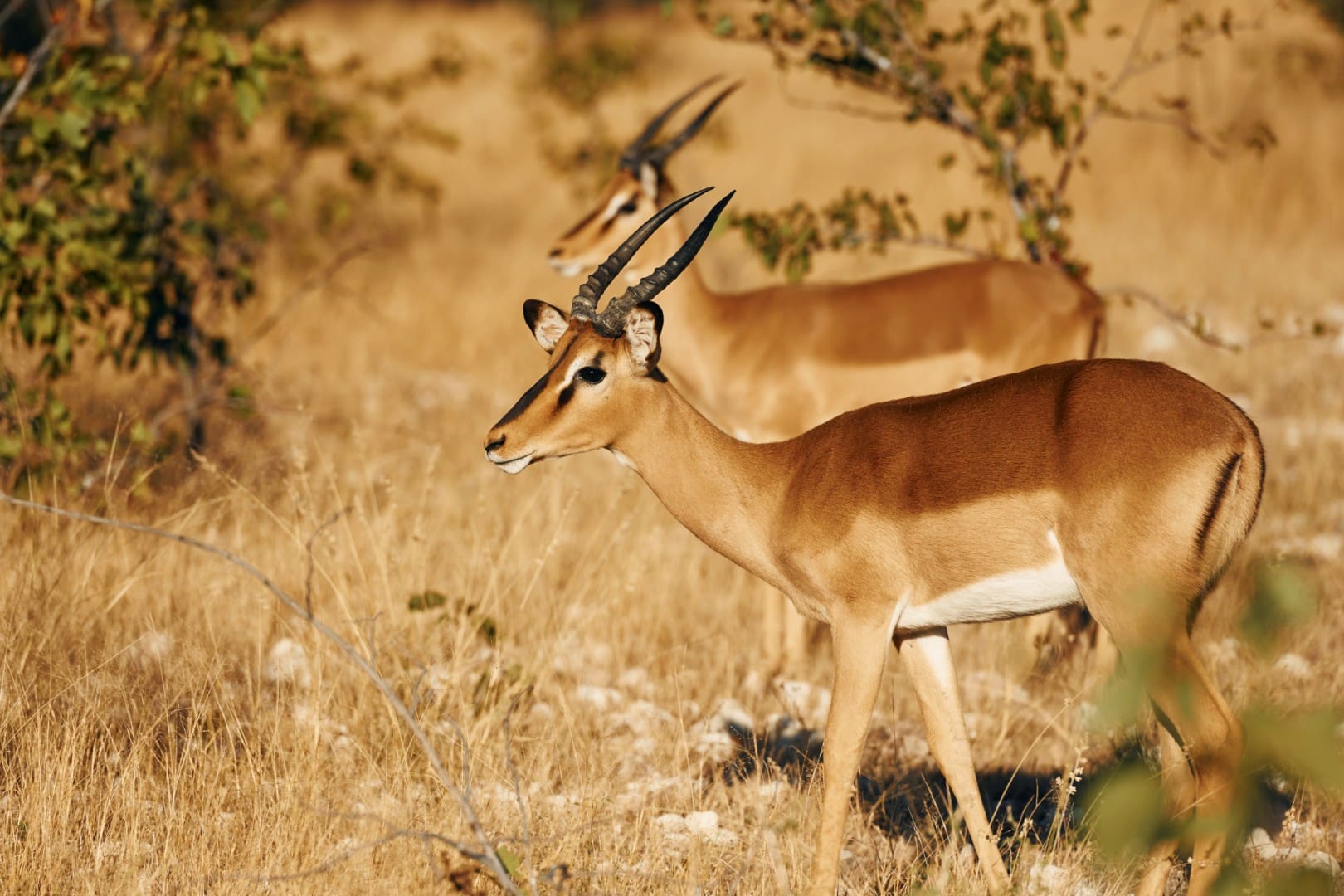
Oryx
Oryx is a majestic desert antelope with distinctive long, straight rapier-like horns, prized by hunters for its elegance, resistance to extreme conditions and spectacular trophy. It is characterized by its massive body build, contrasting coloration in shades of gray, fawn or whitish with black markings on the face and legs, and impressive long horns in both sexes reaching up to 150 centimeters in length. Oryx hunting is a classic desert and savannah safari experience, requiring the ability to shoot accurately over long distances, knowledge of herd behavior and endurance in extreme temperature conditions.
Oryx
All offers
 Kalahari
Hunting map
Where do you hunt for oryx?
Oryx comes in several species distributed in different regions of Africa. The gazelle or gemsbok oryx (Oryx gazella) inhabits southern Africa in Namibia, Botswana, South Africa (Northern Cape, North West), Zimbabwe and southern Angola, preferring the dry savannas and deserts of the Kalahari and Namib. The brindle or eastern oryx (Oryx beisa) is found in East Africa in Ethiopia, Somalia, Kenya, Tanzania, Uganda and South Sudan. The white or Arabian oryx (Oryx leucoryx) historically inhabited the Arabian Peninsula and has been successfully reintroduced in Saudi Arabia, Oman, the United Arab Emirates, Qatar, Jordan and Israel after becoming extinct in the wild. The chinchilla or scimitar-horned oryx (Oryx dammah) is extinct in the wild in North Africa and is the subject of reintroduction programs in Chad, Tunisia and Morocco. Namibia offers the most spectacular and accessible gemsbok hunting in the dramatic desert landscapes of the Namib, Kalahari and the dry savannas of the central regions, where the species reaches its highest density. South Africa provides excellent gemsbok hunting in the Northern Cape and North West provinces with professional infrastructure of hunting ranches. Botswana offers hunting in the natural habitats of the Kalahari. Tanzania provides brindle oryx hunting in the northern Masai and Ruaha regions. Saudi Arabia and Oman offer extremely exclusive and limited white oryx hunts as part of reintroduced population management programs. All of these destinations combine the opportunity to capture one of Africa’s most iconic antelope trophies, spectacular desert and savannah landscapes and the challenge of hunting in extreme conditions.

Hunting calendar
When to hunt oryx?
The oryx hunting season in Namibia and South Africa lasts year-round, although the optimal period is during the drier and cooler months of April through September. Early autumn and winter, especially from May to August, offer comfortable temperatures in desert regions, excellent visibility and active animals concentrating around water sources. July and August are the peak season with ideal conditions for hunting in open desert and savannah areas. The summer months of December through February should be avoided, when extreme heat in the Namib and Kalahari deserts in excess of 40°C makes hunting much more difficult and dangerous. In Tanzania and East Africa, the optimal period for the striped oryx is the dry seasons of June to October and December to March. In the Arabian Peninsula, the best season for the white oryx is the cooler months of October through March, avoiding the extreme heat of summer. The oryx is active both day and night, but in extreme heat concentrates activity into the early mornings and late afternoons, resting in the shade during peak temperatures.
When planning an oryx hunt, it is crucial to understand its unique adaptation to life in extreme desert conditions. The oryx is a master of survival, able to live without drinking water for weeks thanks to unique physiological mechanisms that lower brain temperature and minimize water loss. Oryx live in herds of several to dozens of individuals, with dominant males leading groups of females and young, while older males often live a solitary lifestyle on the periphery. Hunting takes place mainly by stalking in open desert and savannah areas, which requires the use of sand dunes, termites and scattered vegetation as cover. Oryx are characterized by excellent eyesight and alertness, regularly observing their surroundings with their heads raised. Working with an experienced professional hunter (PH) is essential to assess the quality of the trophy-horns in terms of length, base thickness, straightness and symmetry. The southern gemsbok tends to have shorter, thicker horns compared to the slimmer horns of the striped oryx. Shooting is often done at distances of 150 to 300 meters, requiring a stable position with shooting sticks and precise aim. The oryx is an extremely hardy antelope requiring proper gun calibration (minimum .300 Win Mag, .338, .375 H&H) and precise shot placement, as a wounded oryx can be dangerous with its long, sharp horns and capable of a long run. Ethical aspects of oryx hunting are uncontroversial for gemsbok and brindle oryx, which have stable populations. The white oryx requires special permits due to its endangered status. The horns of the oryx are among the most spectacular trophies of African antelope, and their length and straightness are the main criteria for evaluation. Oryx hunting offers an unforgettable experience in dramatic desert landscapes and the opportunity to capture one of the most iconic African safari trophies.
Testimonies
The best hunt with us

See what customers who have hunted with us say about us.


Janusz K. - Polska

“The red deer hunt with The Hunting Hub was perfectly organized from start to finish. The hunting grounds were well chosen, the guides had excellent knowledge of the area and were very professional. The excitement during the rut and the quality of the trophy met all my expectations. I definitely recommend it.”
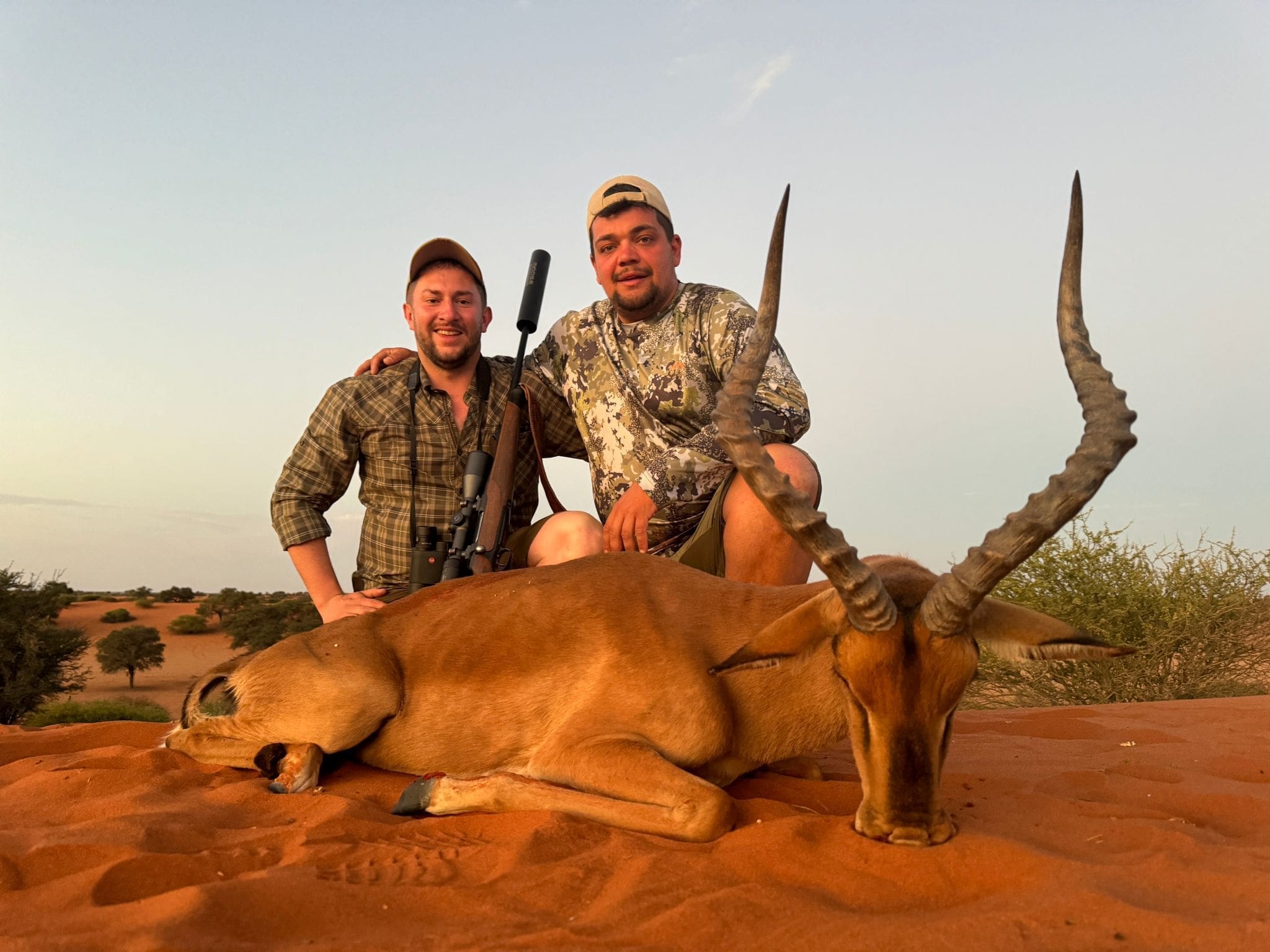
Arkadiusz Malarczyk "The trip to Namibia with The Hunting Hub exceeded my expectations. Impala, oryx, and other African species in their natural habitat, excellent logistics, and the vast knowledge of the local PHs. It was a real adventure of a lifetime, and definitely not my last trip to Africa."
Michael Schmiele - Germany
The roebuck hunt during the rut was perfectly timed and professionally guided. Great knowledge of the area and animal behavior resulted in real hunting opportunities. The Hunting Hub proved to be a reliable and highly professional outfitter.”
Jonathan - DaniaaJonathan - Denmark
An der von The Hunting Hub organisierten Drückjagd teilzunehmen war ein echtes Highlight. Hervorragende Organisation, hohe Sicherheitsstandards und außergewöhnlich viel Wild auf den Treiben
Peter Veerland - Netherlands
De muflonenjacht in Tsjechië met The Hunting Hub was een uitzonderlijke ervaring. Prachtige bergachtige jachtgebieden, sterke populaties muflons en zeer professionele begeleiding. Alles was perfect georganiseerd en het niveau van de jacht was bijzonder hoog. Absoluut een aanrader voor elke veeleisende jager
Contact
Contact us and ask about hunting with The Hunting Hub
Are you looking for an unforgettable hunting trip? Contact us via the form or by email/phone. We will listen to your needs and create the best offer for you.
We are here to answer your questions

Jakub Filip Jabłoński DE / ENG / POL
CEO of The Hunting Hub
 contact@thehuntinghub.com
 +48 570 731 282
 Warsaw, Poland
01
Fill out the form
02
We will call you back within 24 hours
03
We will discuss your requirements
04
We will present you with an offer
 We will go on an adventure
Animal species