Jackal
The jackal is a medium-sized predator of the canine family, prized by hunters for its intelligence, agility and the challenge of hunting this wary and cunning predator. It is characterized by its slender body, elongated muzzle, large ears and gray-brown or golden coloration depending on the species. Hunting the jackal requires excellent knowledge of predator behavior, baiting and night hunting skills, and precision shooting at medium and long distances, making this form of hunting an exciting challenge for hunters who specialize in predators.
All offers
We currently do not have offers in this category, but all is not lost!
Contact us and we will try to organize your dream hunt for you.
We are here to answer your questions

Jakub Filip Jabłoński
CEO of The Hunting Hub
 contact@thehuntinghub.com
 +48 570 731 282
 Warszawa, Polska
Where do you hunt the jackal?
The jackal comes in three main species with a wide geographic range. The golden jackal inhabits vast areas from southeastern Europe through the Middle East, Central Asia to India and Burma, covering countries such as Greece, Bulgaria, Romania, Serbia, Turkey, Syria, Israel, Jordan, Saudi Arabia, Iraq, Iran, Afghanistan, Pakistan and India. In recent decades, the golden jackal has been expanding into northern Europe, appearing in Poland, Germany, Austria, Hungary, Slovakia and the Czech Republic. The striped jackal is found in East and Southern Africa, inhabiting Ethiopia, Kenya, Tanzania, Uganda, South Africa, Botswana, Zimbabwe, Namibia, Zambia and Mozambique. The Cape jackal inhabits southern and eastern Africa in South Africa, Botswana, Zimbabwe, Namibia, Angola, Zambia and Tanzania. South Africa offers excellent hunting opportunities for the cap jackal in the Northern Cape, Eastern Cape and Free State provinces, often as part of predator hunting packages. Turkey, Israel and Middle Eastern countries provide golden jackal hunting in a variety of habitats from deserts to agricultural areas. Botswana and Zimbabwe offer spectacular night hunts for striped jackals in the Kalahari savannas. Poland and other Central European countries are becoming new destinations for hunting the expansive golden jackal, often as part of population control. All of these regions offer unique hunting experiences in a variety of landscapes and climates, from Mediterranean scrublands to African savannas.

When to hunt the jackal?
The hunting season for the jackal in most countries lasts year-round, as the species is often treated as a hunting pest due to predation on small game, birds and conflicts with livestock. However, the optimal hunting season varies by region and hunting method. In Europe, the most effective hunting takes place from October to March, when jackals are most active, the coat reaches its best quality, and less food makes the animals more willing to respond to decoys. Winter, especially during cold periods, forces jackals to be more active and take risks, making hunting more effective. In Africa, the dry season from May to October is most favorable, as jackals concentrate around water sources and are easier to locate in open areas. In the Middle East and Asia, the best time is during the cooler months of November through March. Jackals are primarily nocturnal predators, although they can also be active at dusk and dawn, which determines hunting methods and timing.
When planning a jackal hunt, it is crucial to choose the right method – night hunting using thermal imaging, night vision and lights, hunting with sound decoys imitating wounded animals or hunting with dogs. Jackals are characterized by excellent hearing, smell and intelligence, which requires the hunter to be very careful and knowledgeable about the predator’s behavior. Experienced hunters use electronic decoys that mimic the sounds of injured hares, birds or young animals, which attract jackals from long distances. Night hunting requires professional optical equipment, knowledge of the terrain and adherence to special safety rules. The early morning and evening hours, when jackals move between hiding places and feeding areas, offer excellent opportunities for pulpit or drive-by hunting. Working with local hunters or guides is valuable for learning the jackals’ movement routes, burrow locations and preferred hunting areas. Shooting often takes place at distances of 100 to 300 meters, requiring a stable shooting position and precise aiming. In some regions, jackal hunting has a control character to protect game populations and reduce livestock damage, giving it an additional economic context. Regardless of the method and location, jackal hunting requires adherence to local regulations, safety rules and an ethical approach to controlling predator populations, respecting their role in the ecosystem.
The best hunt with us

See what customers who have hunted with us say about us.


Janusz K. - Polska

“The red deer hunt with The Hunting Hub was perfectly organized from start to finish. The hunting grounds were well chosen, the guides had excellent knowledge of the area and were very professional. The excitement during the rut and the quality of the trophy met all my expectations. I definitely recommend it.”
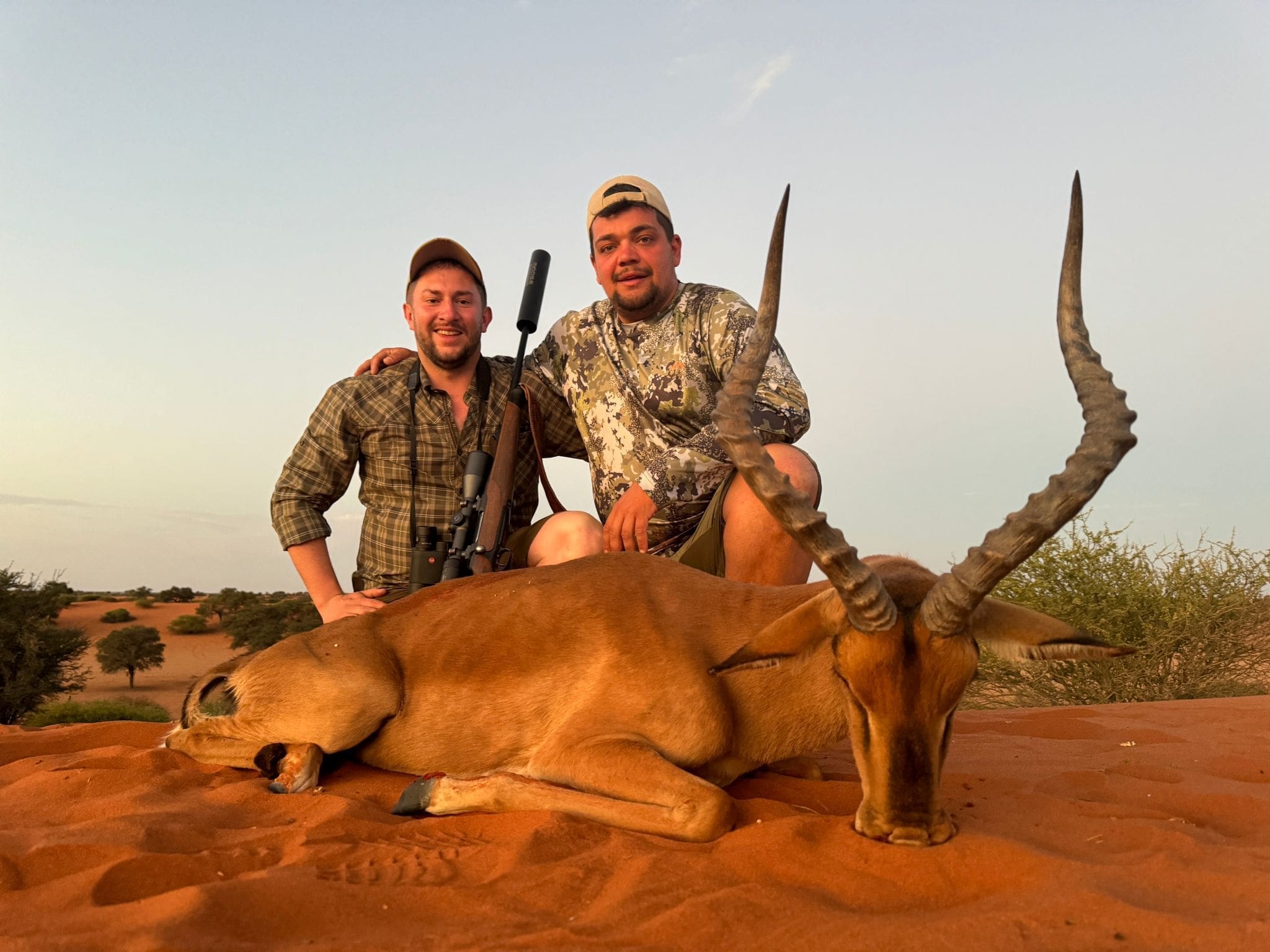
Arkadiusz Malarczyk "The trip to Namibia with The Hunting Hub exceeded my expectations. Impala, oryx, and other African species in their natural habitat, excellent logistics, and the vast knowledge of the local PHs. It was a real adventure of a lifetime, and definitely not my last trip to Africa."
Michael Schmiele - Germany
The roebuck hunt during the rut was perfectly timed and professionally guided. Great knowledge of the area and animal behavior resulted in real hunting opportunities. The Hunting Hub proved to be a reliable and highly professional outfitter.”
Jonathan - DaniaaJonathan - Denmark
An der von The Hunting Hub organisierten Drückjagd teilzunehmen war ein echtes Highlight. Hervorragende Organisation, hohe Sicherheitsstandards und außergewöhnlich viel Wild auf den Treiben
Peter Veerland - Netherlands
De muflonenjacht in Tsjechië met The Hunting Hub was een uitzonderlijke ervaring. Prachtige bergachtige jachtgebieden, sterke populaties muflons en zeer professionele begeleiding. Alles was perfect georganiseerd en het niveau van de jacht was bijzonder hoog. Absoluut een aanrader voor elke veeleisende jager
Contact us and ask about hunting with The Hunting Hub
Are you looking for an unforgettable hunting trip? Contact us via the form or by email/phone. We will listen to your needs and create the best offer for you.
We are here to answer your questions

Jakub Filip Jabłoński DE / ENG / POL
CEO of The Hunting Hub
 We will go on an adventure