White-tailed Gnu
White-tailed wildebeest, also known as black wildebeest, are massive African antelopes with a distinctive body shape, dark gray to black coloration and a long white tail. They are distinguished by their powerful forelimbs, a mane that runs along the nape of the neck, curved horns in both sexes, and a characteristic propensity for spectacular leaps and runs. Hunting white-tailed wildebeest is a classic African bush hunting experience, requiring the ability to shoot accurately at medium to long distances, knowledge of herd behavior and the ability to quickly assess trophy quality under dynamic conditions.
White-tailed Gnu
All offers
 Kalahari
Hunting map
Where do you hunt white-tailed wildebeest?
The white-tailed wildebeest is endemic to southern Africa, where its range is much more limited than that of the blue wildebeest. The species is now found mainly in South Africa, particularly in the Free State, Eastern Cape, Northern Cape and Mpumalanga provinces, where it inhabits open grassy plains and plateaus. Historically, the white-tailed wildebeest came close to extinction in the early 20th century, but through intensive conservation and reintroduction programs, the population has recovered. Today it is also found in Namibia, Lesotho, Eswatini (Swaziland) and in some parks and private reserves. South Africa offers the most professional and diverse hunting opportunities for the white-tailed wildebeest, especially in the Free State province, which is the heart of the species’ range. Numerous hunting ranches and managed circuits provide excellent infrastructure, professional guiding and the opportunity to take spectacular trophies with strong, widely spaced horns. Namibia offers hunting in more rugged, desert-steppe landscapes with less hunting pressure. Many white-tailed wildebeest hunts are organized as part of larger hunting packages that include other species of antelope and bush animals, allowing for a comprehensive hunting safari experience. All of these destinations combine superbly managed populations, spectacular scenery of the South African plains, and the opportunity to capture a unique trophy of a species that once stood on the brink of extinction.

Hunting calendar
When to hunt white-tailed wildebeest?
The hunting season for white-tailed wildebeest in South Africa officially lasts year-round, although the most optimal period is during the dry and cooler months of May through September. Early winter, especially May and June, offers comfortable temperatures, excellent visibility and active animals foraging on the grassy plains. July and August are the peak of the winter season, when vegetation is at its lowest, making it easier to locate and observe herds, and wildebeest concentrate around water sources and the best pastures. September marks the end of winter and the beginning of spring, when the animals are in prime condition after winter and landscapes begin to green up. The mating season of the white-tailed wildebeest is in March and April, when males are particularly active, territorial and demonstrate spectacular behavior, which can be attractive to hunters, although it is associated with higher temperatures and the rainy season. Hunting is possible year-round, but it should be taken into account that the summer months from December to February are characterized by high temperatures, heavy rainfall and denser vegetation, which can make hunting difficult.
When planning to hunt white-tailed wildebeest, it is crucial to understand the herd behavior of this species. Wildebeest live in groups of several to dozens of individuals, often in the company of other antelope like blesbok or springbok. Mature males often lead solitary lifestyles or form small bachelor groups, making them easier to selectively shoot. The early morning and late afternoon hours are the time of greatest activity, when the animals leave their resting places and move to feeding grounds. Hunting is usually carried out by stalking – sneaking or swooping in open plains, which requires the use of terrain, shrubs and natural cover. White-tailed wildebeest are characterized by excellent eyesight and alertness, which requires the hunter to be patient, quiet and plan his approach precisely. Cooperation with an experienced professional hunter (PH) is essential for proper evaluation of trophy quality – horns in terms of length, width of spacing and base thickness. Shooting is often done at distances of 100 to 250 meters from a reclining position or with the use of shooting sticks, requiring a stable position and precise aiming at the vital zone. White-tailed wildebeest are hardy animals, requiring proper gun calibration and shot placement for quick and humane acquisition. Hunting this species offers not only the acquisition of a unique trophy, but also a contribution to the sustainable population management of a species that has been saved from extinction. Regardless of the timing or method, hunting white-tailed wildebeest requires adherence to the highest standards of hunting ethics, cooperation with local managers, and respect for the conservation history of this unique species.
Testimonies
The best hunt with us

See what customers who have hunted with us say about us.


Janusz K. - Polska

“The red deer hunt with The Hunting Hub was perfectly organized from start to finish. The hunting grounds were well chosen, the guides had excellent knowledge of the area and were very professional. The excitement during the rut and the quality of the trophy met all my expectations. I definitely recommend it.”
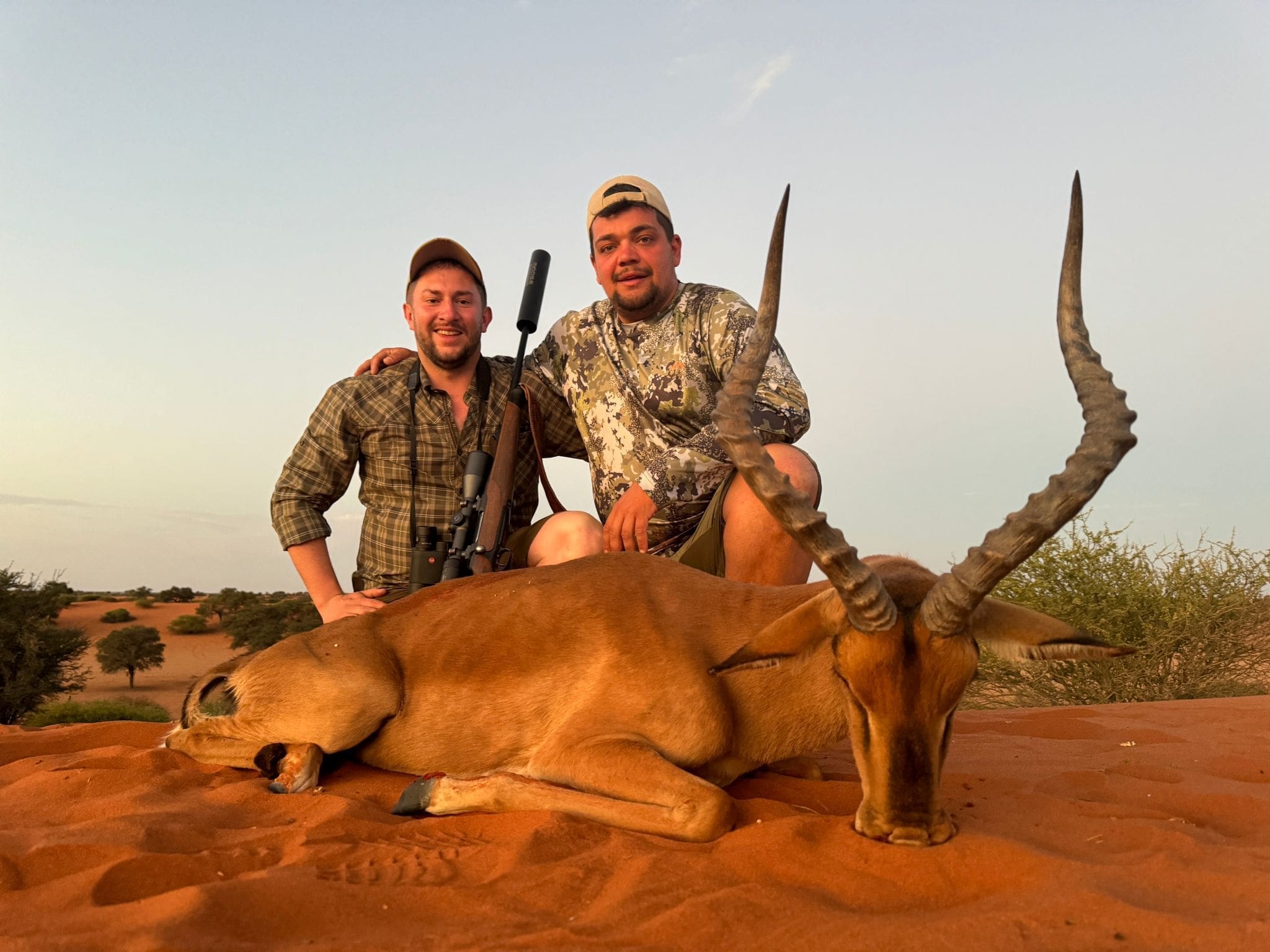
Arkadiusz Malarczyk "The trip to Namibia with The Hunting Hub exceeded my expectations. Impala, oryx, and other African species in their natural habitat, excellent logistics, and the vast knowledge of the local PHs. It was a real adventure of a lifetime, and definitely not my last trip to Africa."
Michael Schmiele - Germany
The roebuck hunt during the rut was perfectly timed and professionally guided. Great knowledge of the area and animal behavior resulted in real hunting opportunities. The Hunting Hub proved to be a reliable and highly professional outfitter.”
Jonathan - DaniaaJonathan - Denmark
An der von The Hunting Hub organisierten Drückjagd teilzunehmen war ein echtes Highlight. Hervorragende Organisation, hohe Sicherheitsstandards und außergewöhnlich viel Wild auf den Treiben
Peter Veerland - Netherlands
De muflonenjacht in Tsjechië met The Hunting Hub was een uitzonderlijke ervaring. Prachtige bergachtige jachtgebieden, sterke populaties muflons en zeer professionele begeleiding. Alles was perfect georganiseerd en het niveau van de jacht was bijzonder hoog. Absoluut een aanrader voor elke veeleisende jager
Contact
Contact us and ask about hunting with The Hunting Hub
Are you looking for an unforgettable hunting trip? Contact us via the form or by email/phone. We will listen to your needs and create the best offer for you.
We are here to answer your questions

Jakub Filip Jabłoński DE / ENG / POL
CEO of The Hunting Hub
 contact@thehuntinghub.com
 +48 570 731 282
 Warsaw, Poland
01
Fill out the form
02
We will call you back within 24 hours
03
We will discuss your requirements
04
We will present you with an offer
 We will go on an adventure
Animal species