Springbok
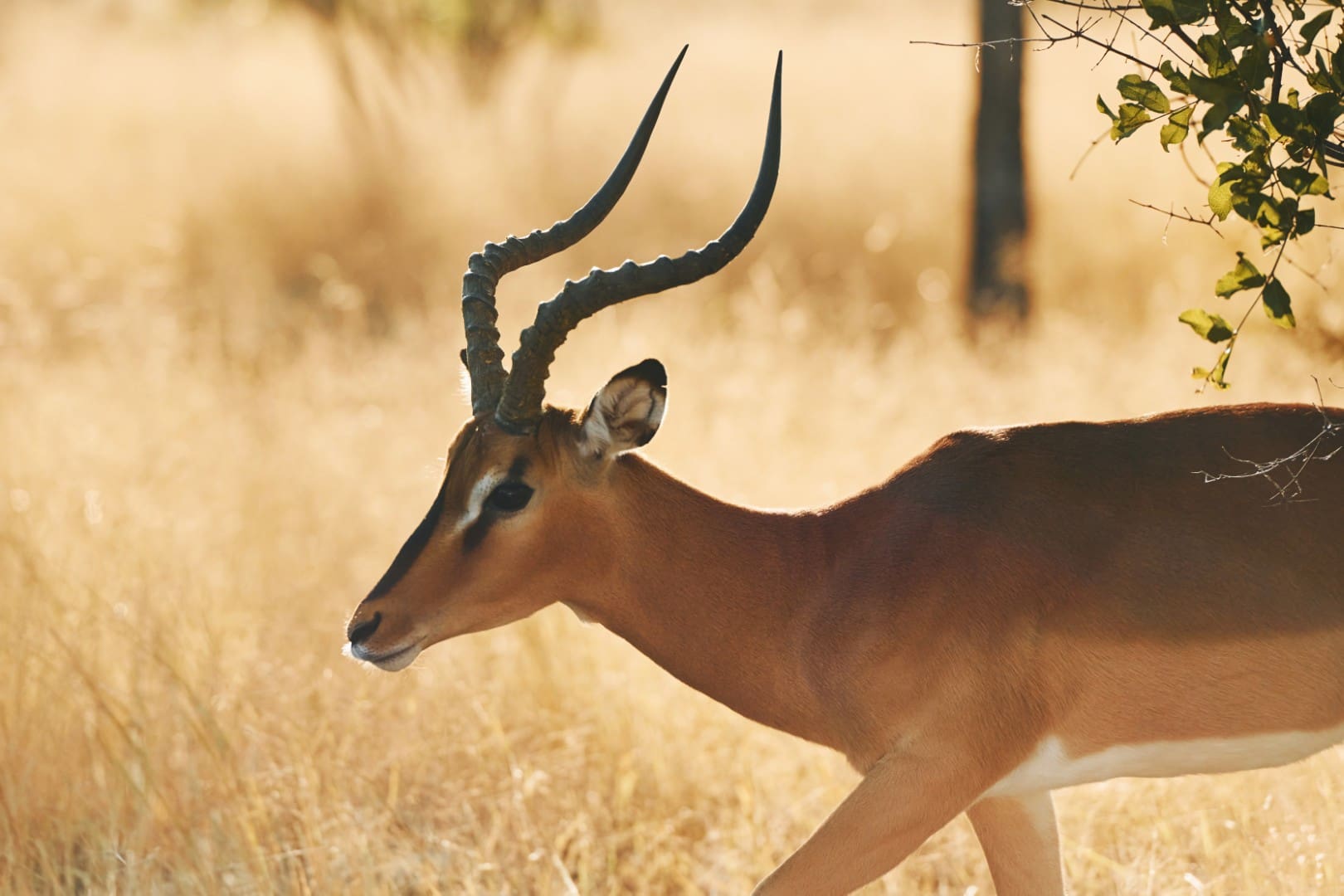
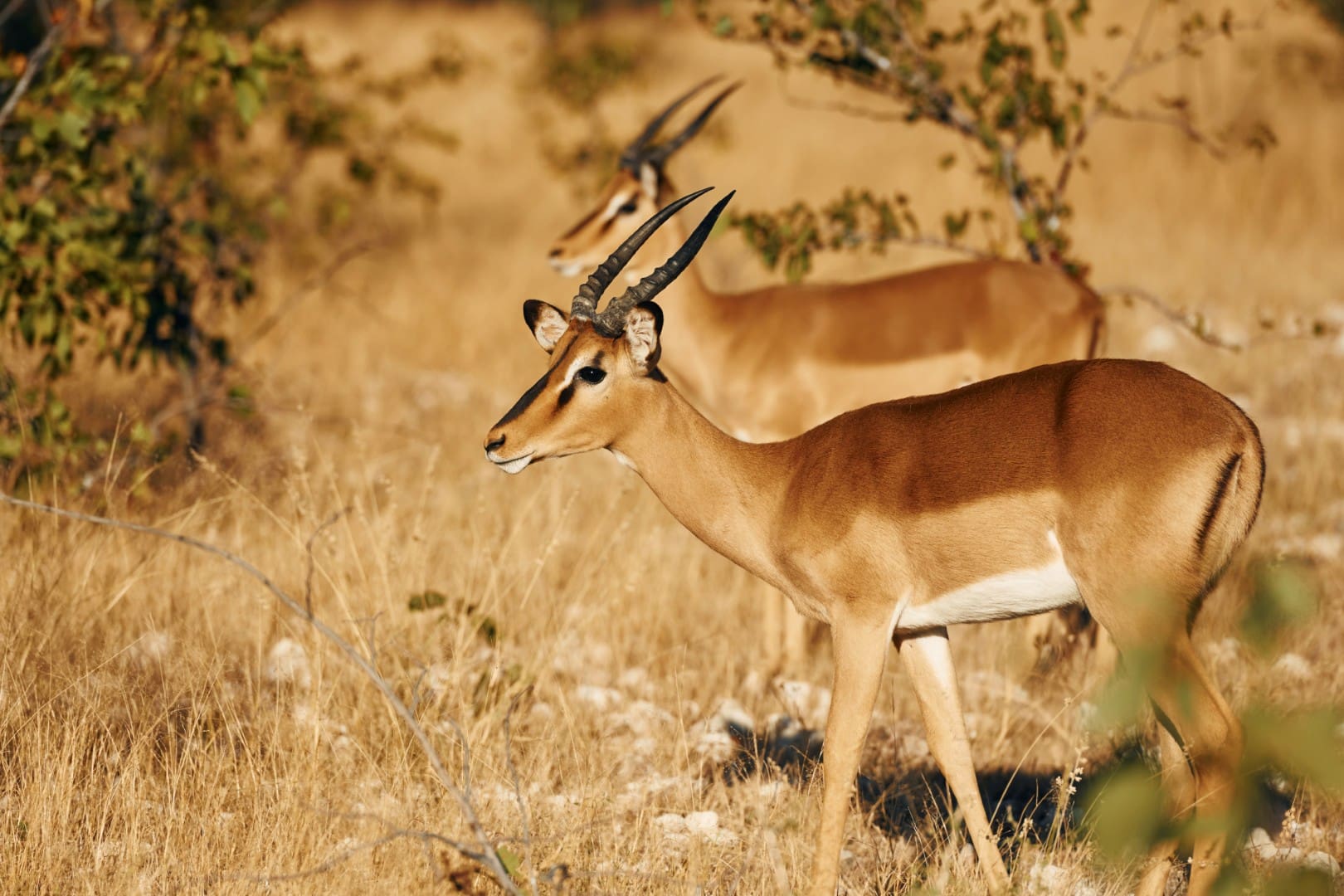
The springbok is a medium-sized antelope endemic to southern Africa, prized by hunters for its elegance, spectacular jumps and distinctive coloration with a dark brown stripe down the flanks. It is characterized by a slender, athletic body, a fawn-yellow to reddish brown coloration with a white underbelly, a distinctive dark spot running from the eyes through the flanks, and lyrically curved horns in both sexes reaching up to 50 centimeters in length. Springbok hunting is a classic safari experience of the South African plains, requiring the ability to shoot accurately at medium to long distances and knowledge of the herd behavior of this agile species capable of spectacular leaps known as “pronking.”
Springbok
All offers
 Kalahari
Hunting map
Where do you hunt for springbok?
Springbok is endemic to southern Africa, inhabiting open grassy plains, semi-deserts and dry savannas. The species is found in South Africa (particularly in the Northern Cape, Western Cape, Free State, North West and Eastern Cape provinces), Namibia, Botswana and marginally in southern Angola. Historically, the springbok formed some of the largest mammal migrations on the continent, with herds numbering in the millions of individuals, although such phenomena no longer occur today. South Africa offers the most accessible and professionally organized springbok hunting in the vast plains of the Karoo, Northern Cape and Free State, where the species is extremely abundant and the cornerstone of the hunting economy. Namibia provides spectacular hunts in the dramatic landscapes of the Kalahari, central plains and southern regions with huge populations and excellent trophy quality. Botswana offers hunting in the natural environments of the Kalahari, although availability is more limited. In addition to the normal coloration, selective breeding in South Africa has produced rare color mutations – white springbok (creamy white coloration), black springbok (dark brown to black coloration) and copper springbok (intense reddish coloration), which are the subject of exclusive hunts at selected private ranches. All of these destinations combine an abundance of springbok populations, spectacular scenery of the open plains and the opportunity for a beautiful trophy as an integral part of a safari to the fawn antelopes of southern Africa.

Hunting calendar
When to hunt for springbok?
The springbok hunting season in South Africa and Namibia lasts year-round, although the most optimal period is during the dry and cooler months of April through September. Early autumn and winter, especially from May to August, offer comfortable temperatures, excellent visibility across the open plains through the low, dry grass, and active animals concentrating around water sources and the best pastures. July and August are the peak of the season with ideal conditions for hunting in open areas with crystal clear visibility allowing observation of herds from long distances. Springbok mating season is March-May in South Africa, when males are at their most active, territorial and demonstrate spectacular “pronking” behavior – a series of high, stiff-legged leaps with an extended white crest on the back for signaling and communication. Consider that the summer months of December through February are characterized by high temperatures, intense thunderstorms and denser grass, which can make hunting difficult. The springbok is active both day and night, but the most intensive foraging is in the early morning and late afternoon hours.
When planning a springbok hunt, it is crucial to understand their herd behavior and remarkable agility. Springbok live in flocks of varying sizes – from small groups of a dozen individuals to larger aggregations of hundreds of animals, especially during the dry season around water sources. During the mating season, mature males occupy and defend small territories in an attempt to contain groups of females, while young males form bachelor groups. The springbok prefers open grassy plains with minimal stands of trees, where its excellent eyesight and ability to leap at lightning speed give it an advantage over predators. Its characteristic “pronking” behavior – a series of leaps reaching 3-4 meters in height with a curved back and an extended white crest – serves to alert the herd and confuse predators. Hunting is mainly done by stalking in open plains, which requires the use of terrain, small hills, termites and scattered vegetation as cover. Springbok are characterized by excellent eyesight and alertness, regularly observing their surroundings while foraging. Working with a professional hunter (PH) allows identification of mature males and evaluation of trophy quality – horns in terms of length along the curve, base thickness, curved shape and symmetry. Shooting is often done at distances of 100 to 250 meters from a reclining position or from shooting sticks. Light to medium calibers (.243 Win, .270 Win, 7mm-08, .30-06) with precision ammunition are preferred. The springbok is a relatively small and delicate antelope requiring precise placement of the shot into the vital zone behind the shoulder. Ethical aspects are uncontroversial – the springbok has very stable and numerous populations, is not endangered and is the primary game species of southern Africa. Springbok horns are elegant and make beautiful trophies, and the color mutations (white, black, copper) are especially prized by collectors. Springbok meat is highly regarded as one of the best hunting meats. Springbok hunting offers a dynamic experience on the open plains and is an integral part of any safari in southern Africa.
Testimonies
The best hunt with us

See what customers who have hunted with us say about us.


Janusz K. - Polska

“The red deer hunt with The Hunting Hub was perfectly organized from start to finish. The hunting grounds were well chosen, the guides had excellent knowledge of the area and were very professional. The excitement during the rut and the quality of the trophy met all my expectations. I definitely recommend it.”
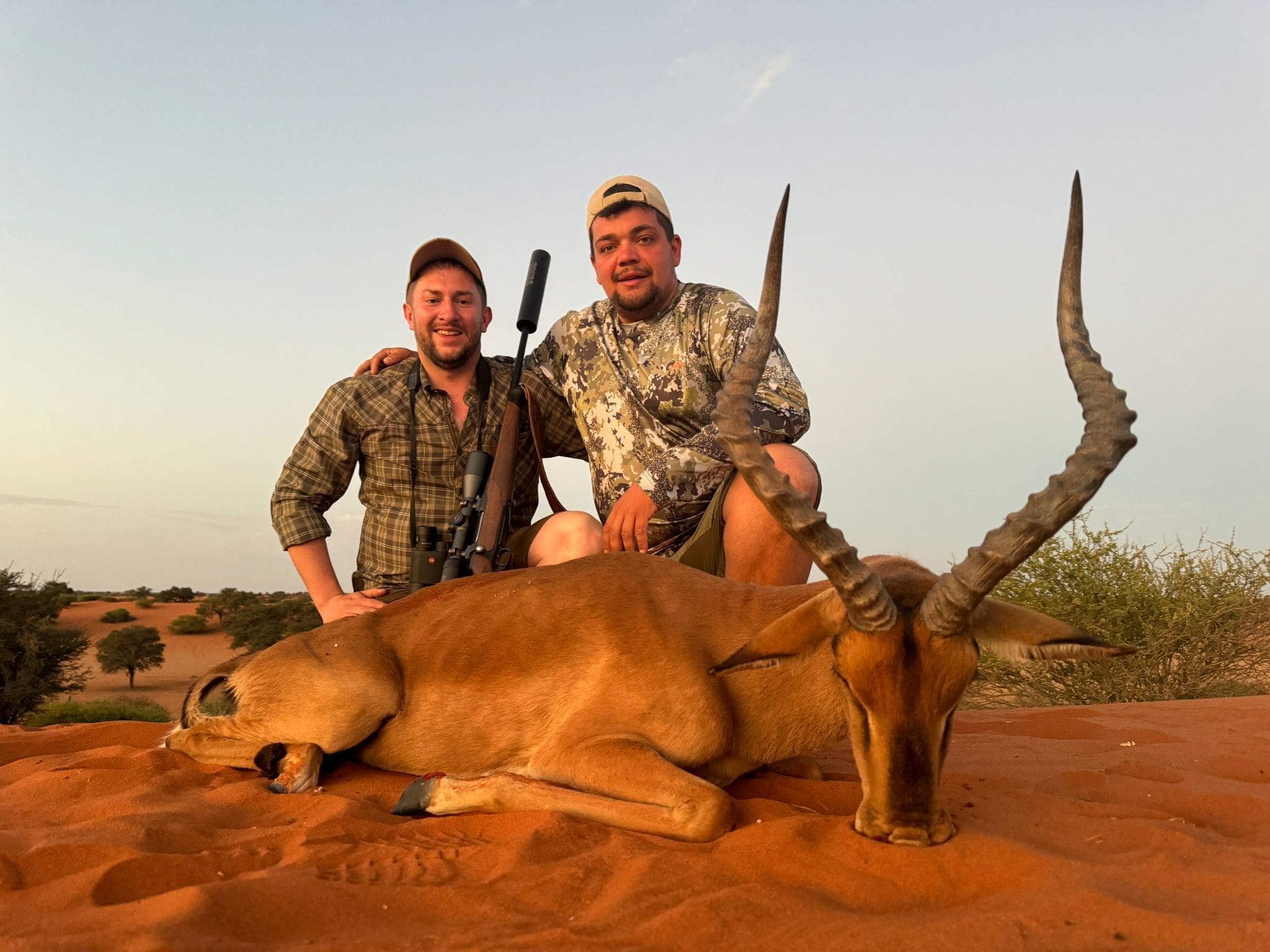
Arkadiusz Malarczyk "The trip to Namibia with The Hunting Hub exceeded my expectations. Impala, oryx, and other African species in their natural habitat, excellent logistics, and the vast knowledge of the local PHs. It was a real adventure of a lifetime, and definitely not my last trip to Africa."
Michael Schmiele - Germany
The roebuck hunt during the rut was perfectly timed and professionally guided. Great knowledge of the area and animal behavior resulted in real hunting opportunities. The Hunting Hub proved to be a reliable and highly professional outfitter.”
Jonathan - DaniaaJonathan - Denmark
An der von The Hunting Hub organisierten Drückjagd teilzunehmen war ein echtes Highlight. Hervorragende Organisation, hohe Sicherheitsstandards und außergewöhnlich viel Wild auf den Treiben
Peter Veerland - Netherlands
De muflonenjacht in Tsjechië met The Hunting Hub was een uitzonderlijke ervaring. Prachtige bergachtige jachtgebieden, sterke populaties muflons en zeer professionele begeleiding. Alles was perfect georganiseerd en het niveau van de jacht was bijzonder hoog. Absoluut een aanrader voor elke veeleisende jager
Contact
Contact us and ask about hunting with The Hunting Hub
Are you looking for an unforgettable hunting trip? Contact us via the form or by email/phone. We will listen to your needs and create the best offer for you.
We are here to answer your questions

Jakub Filip Jabłoński DE / ENG / POL
CEO of The Hunting Hub
 contact@thehuntinghub.com
 +48 570 731 282
 Warsaw, Poland
01
Fill out the form
02
We will call you back within 24 hours
03
We will discuss your requirements
04
We will present you with an offer
 We will go on an adventure
Animal species