Sika deer
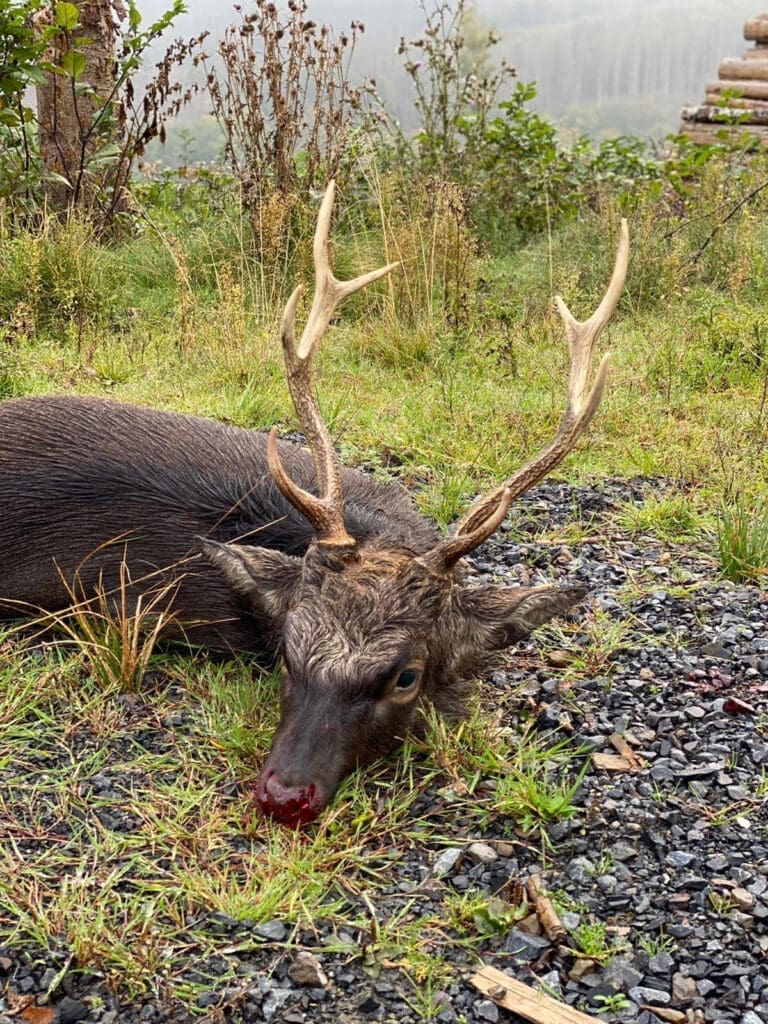
The sika deer is a medium-sized deer native to East Asia, prized by hunters for its elegance, distinctive spotted coloration and beautiful, compact antlers. It is characterized by a compact body reaching a weight of up to 110 kilograms in bulls, a brown coloration with characteristic white spots more pronounced in summer, a white mirror with a black border, and antlers with 6-10 legs reaching a length of up to 80 centimeters. Hunting sika deer is a fascinating hunting experience that combines the challenges of hunting a noble with smaller scales and more overgrown habitats, requiring patience, decoying skills and precision shooting in dense forests.
Sika deer
All offers
 Czech Republic
Hunting map
Where do you hunt for sika deer?
The sika deer occurs naturally in Japan, eastern Russia, northeastern China, North and South Korea, Taiwan and Vietnam, where it inhabits mountain and mixed forests. Thanks to introductions, the species has successfully acclimatized to many countries in Europe, New Zealand, Australia and the United States. Poland offers excellent opportunities for sika deer hunting in the West Pomeranian, Lubuskie, Lower Silesian and Pomeranian provinces, where the species has been introduced and has established stable populations, especially in the Lower Silesian Forests and Drawsko Landscape Park. The Czech Republic provides spectacular sika hunting in the Sudetenland and other forest complexes with a long tradition of managing the species. Slovakia offers hunting in mountain and foothill forests. Germany allows hunting in the northern states. The United Kingdom, particularly Scotland and England, provides hunts for introduced populations in a variety of landscapes from heathlands to forests. Ireland offers hunts for expanding populations. Austria has limited populations in some regions. New Zealand provides hunts for introduced populations in spectacular island landscapes. Russia provides hunting for natural populations in the Far East. All of these destinations combine the availability of sika deer in a wide variety of forest environments and the opportunity for a distinctive trophy as an alternative or complement to classic deer.

Hunting calendar
When to hunt a sika deer?
The sika deer hunting season in Poland lasts from September 1 to January 15, with the roaring period falling in September and October, when bulls are most active, territorial and responsive to baiting. September is the peak of the roar, when bulls make distinctive high-pitched, violent noises resembling a whistle or squeak, much different from the deep roar of a red deer. October offers a continuation of the roar and excellent hunting conditions. The later months of November through January provide winter hunting, when sika are more skittish and concentrate in their wintering grounds. In the Czech Republic and other European countries, the season is similar, usually from August/September to January. In the UK, the season runs from August to April, depending on the region. In New Zealand in the southern hemisphere, the season shifts accordingly, with the roaring season falling in March-April. White-tailed deer are mainly active during dusk and night, especially in areas with high human pressure, although they can also be active during the day during the roar.
When planning to hunt sika deer, it is crucial to understand its environmental preferences and behaviors that distinguish it from red deer. The sika prefers dense mixed and coniferous forests with rich undergrowth, scrubby areas, youngsters, and swampy and marshy areas where it finds shelter and food. It is more shy and secretive than the red deer, preferring dense thickets and avoiding open spaces. Hunting is mainly done by baiting during the roar, pulpit hunting over feeding grounds or trails, and group hunting in some regions. Decoying requires familiarity with the characteristic high-pitched whistle of a sika, which is significantly different from a noble’s roar. Cooperation with an experienced hunter is valuable for proper trophy selection and evaluation. A sika’s antlers are evaluated in terms of head length, number of legs, weight, girth of florets, and overall compactness and aesthetics. Mature bulls usually have 8 legs (quadrupeds), although the largest can reach 10-12 legs. Shooting is usually done at distances of 50 to 150 meters in dense forests, requiring quick reaction and precise aiming in limited visibility. Versatile calibers (.270 Win, .30-06, 7×64, 8×57 IS, .308 Win) with good expansive ammunition are preferred. Sika is a relatively delicate deer requiring precise shooting into the vital zone. Ethical considerations require adherence to selective shooting in accordance with breeding plans. Sika deer provide excellent meat with a delicate flavor, often considered more tender than red deer. Hunting sika offers a unique experience combining the challenges of skittishness and dense habitats and the opportunity to acquire a distinctive, compact trophy as an interesting alternative to classic European deer.
LUT
MAR
KWI
MAJ
CZE
LIP
SIE
Testimonies
The best hunt with us

See what customers who have hunted with us say about us.


Janusz K. - Polska

“The red deer hunt with The Hunting Hub was perfectly organized from start to finish. The hunting grounds were well chosen, the guides had excellent knowledge of the area and were very professional. The excitement during the rut and the quality of the trophy met all my expectations. I definitely recommend it.”
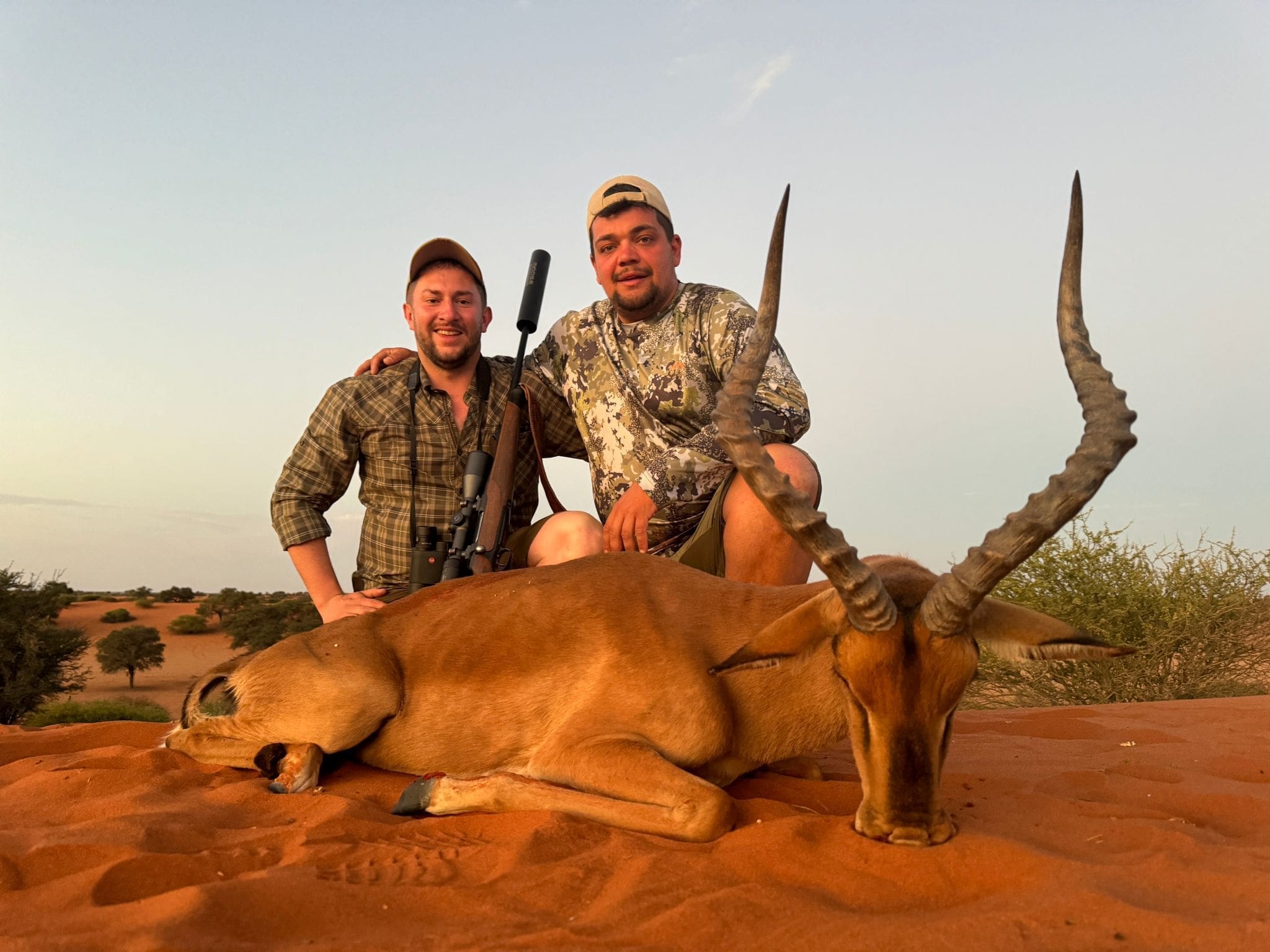
Arkadiusz Malarczyk "The trip to Namibia with The Hunting Hub exceeded my expectations. Impala, oryx, and other African species in their natural habitat, excellent logistics, and the vast knowledge of the local PHs. It was a real adventure of a lifetime, and definitely not my last trip to Africa."
Michael Schmiele - Germany
The roebuck hunt during the rut was perfectly timed and professionally guided. Great knowledge of the area and animal behavior resulted in real hunting opportunities. The Hunting Hub proved to be a reliable and highly professional outfitter.”
Jonathan - DaniaaJonathan - Denmark
An der von The Hunting Hub organisierten Drückjagd teilzunehmen war ein echtes Highlight. Hervorragende Organisation, hohe Sicherheitsstandards und außergewöhnlich viel Wild auf den Treiben
Peter Veerland - Netherlands
De muflonenjacht in Tsjechië met The Hunting Hub was een uitzonderlijke ervaring. Prachtige bergachtige jachtgebieden, sterke populaties muflons en zeer professionele begeleiding. Alles was perfect georganiseerd en het niveau van de jacht was bijzonder hoog. Absoluut een aanrader voor elke veeleisende jager
Contact
Contact us and ask about hunting with The Hunting Hub
Are you looking for an unforgettable hunting trip? Contact us via the form or by email/phone. We will listen to your needs and create the best offer for you.
We are here to answer your questions

Jakub Filip Jabłoński DE / ENG / POL
CEO of The Hunting Hub
 contact@thehuntinghub.com
 +48 570 731 282
 Warsaw, Poland
01
Fill out the form
02
We will call you back within 24 hours
03
We will discuss your requirements
04
We will present you with an offer
 We will go on an adventure
Animal species