Caracal
The caracal is a medium-sized carnivore of the cat family, prized by hunters for its elegance, agility and distinctive long black brushes on its ears, which make a unique trophy. It is characterized by its slender, athletic physique, reddish brown or sandy yellow coloration, elongated legs and exceptional hunting abilities that allow it to hunt birds in flight. Hunting the caracal presents an exciting hunting challenge, requiring specialized night hunting skills, excellent knowledge of feline behavior, and precise shooting at a fast-moving target in difficult lighting conditions.
Caracal
All offers
 Kalahari
Hunting map
Where do you hunt a caracal?
The caracal has an extensive geographic range spanning Africa, the Middle East and Central Asia. In Africa, the species inhabits virtually the entire continent with the exception of the equatorial forests and the Sahara, occurring in South Africa, Namibia, Botswana, Zimbabwe, Zambia, Mozambique, Malawi, Tanzania, Kenya, Uganda, Ethiopia, Somalia, Sudan, Egypt and all North and West African countries. Outside Africa, the caracal is found in the Middle East in Israel, Jordan, Saudi Arabia, Yemen, Oman, the United Arab Emirates, Iraq, Syria and Turkey, as well as in Central Asia in Iran, Afghanistan, Pakistan, India, Turkmenistan, Uzbekistan and Kazakhstan. South Africa offers the most professionally organized caracal hunting in the Northern Cape, Western Cape, Eastern Cape, Free State and North West provinces, where the species is managed as a hunting pest due to predation on small game and sheep farming. Namibia provides excellent hunting opportunities in a variety of habitats from deserts to savannas in farm regions where caracals are actively controlled. Botswana and Zimbabwe offer caracal hunting in natural habitats as part of predator packages. The Middle East, particularly the Persian Gulf countries, offers unique desert caracal hunting in extreme conditions, although availability is limited. All of these destinations combine a variety of landscapes, from dry savannas and deserts to semi-desert scrubland, and the opportunity to hunt this elusive and intelligent predator, which poses a challenge to even the most experienced hunters who specialize in cats.

Hunting calendar
When to hunt a caracal?
The caracal hunting season in most African countries lasts year-round, as the species is often classified as a hunting pest and is not subject to strict seasonal regulations. However, the most optimal period for hunting in southern Africa is during the cooler and drier months of April through October, when visibility is better and caracals are more active in search of food. Early autumn and winter, especially from May to August, offer comfortable nighttime temperatures and minimal precipitation, making for many hours of nocturnal hunting. During this period, caracals hunt extensively for rodents, small antelope, hares and fowl, traversing their vast territories of 5 to 65 square kilometers, depending on the availability of food. September and October mark the end of winter with rising temperatures, but still good conditions. In the desert regions of Namibia and the Middle East, the best period is the cooler months of November through March, avoiding the extreme heat of summer. The caracal is primarily a nocturnal and twilight predator, most active from sunset to dawn, although in areas with low human pressure it can also be active during the day, especially on cloudy days.
When planning to hunt the caracal, it is crucial to understand its solitary, territorial lifestyle and exceptional hunting abilities. The caracal is a master of stealth and ambush, capable of vertical leaps in excess of 3 meters to capture birds in flight, making it one of the most agile felines. Hunting is mainly carried out by night methods using spotlights, thermal imaging or night vision while patrolling with all-terrain vehicles along farm roads, animal trails and feeding areas. Cooperation with local farmers and ranch managers is extremely valuable, as they have knowledge of caracals’ movement routes, locations of lairs in rock crevices or dense thickets, and areas where the predator causes damage. The use of electronic decoys that imitate the sounds of injured hares, rodents or bird cries can effectively attract caracals from long distances, taking advantage of their curiosity and hunting instinct. Hunting with dogs, especially greyhounds and ridgebacks, is a traditional and exciting method in South Africa, although it requires excellent coordination and quick reactions. Some hunters prefer pulpit hunts over baits or water holes, where caracals regularly appear during their nocturnal migrations. Shooting a caracal is extremely demanding – this fast, agile predator can change direction in a fraction of a second, and shots often take place at distances of 30 to 100 meters in night-light conditions, requiring excellent weapon knowledge, quick reaction and precise aiming. The caracal, despite its relatively small size (body weight of 8-20 kg), is a hardy predator requiring proper shot placement for humane acquisition. Ethical aspects of caracal hunting are less controversial than for other felids, as the species has stable populations throughout most of its range and is often treated as a pest in livestock areas, where predation on sheep and small game justifies population control. Hunting of the caracal is usually of a control nature to protect livestock and reduce human-predator conflicts, which gives it an additional economic context. The skin of the caracal, with its distinctive ears topped by long black brushes, is a unique and spectacular preparation trophy, highly prized by cat collectors. The height of the ear brushes (often exceeding 5 centimeters) is the main criterion for judging the quality of a trophy. Regardless of the method and location, caracal hunting requires adherence to local regulations, night hunting safety rules and an ethical approach to controlling predator populations, respecting their role in the ecosystem as regulators of rodent and small mammal populations.
Testimonies
The best hunt with us

See what customers who have hunted with us say about us.


Janusz K. - Polska

“The red deer hunt with The Hunting Hub was perfectly organized from start to finish. The hunting grounds were well chosen, the guides had excellent knowledge of the area and were very professional. The excitement during the rut and the quality of the trophy met all my expectations. I definitely recommend it.”
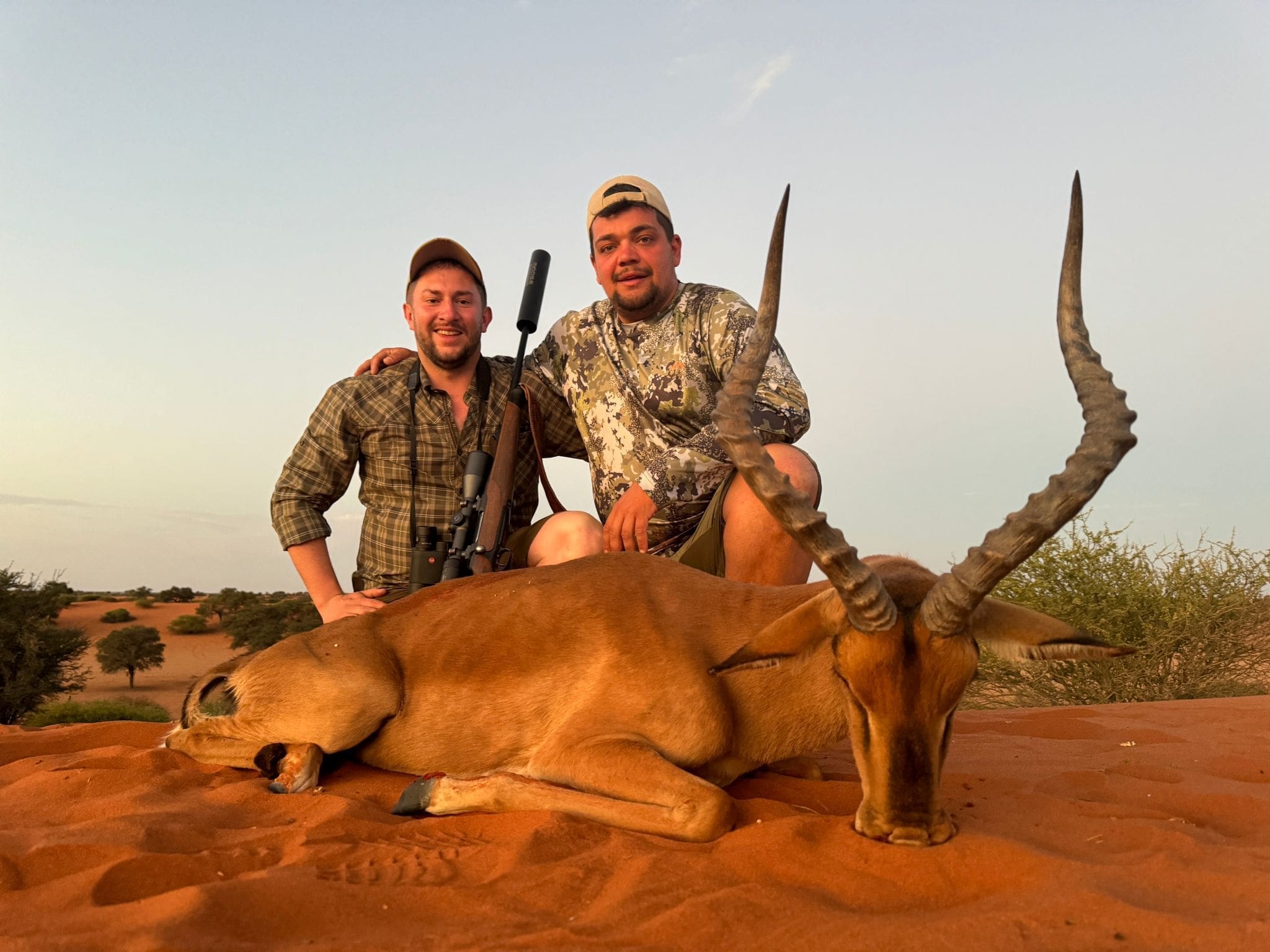
Arkadiusz Malarczyk "The trip to Namibia with The Hunting Hub exceeded my expectations. Impala, oryx, and other African species in their natural habitat, excellent logistics, and the vast knowledge of the local PHs. It was a real adventure of a lifetime, and definitely not my last trip to Africa."
Michael Schmiele - Germany
The roebuck hunt during the rut was perfectly timed and professionally guided. Great knowledge of the area and animal behavior resulted in real hunting opportunities. The Hunting Hub proved to be a reliable and highly professional outfitter.”
Jonathan - DaniaaJonathan - Denmark
An der von The Hunting Hub organisierten Drückjagd teilzunehmen war ein echtes Highlight. Hervorragende Organisation, hohe Sicherheitsstandards und außergewöhnlich viel Wild auf den Treiben
Peter Veerland - Netherlands
De muflonenjacht in Tsjechië met The Hunting Hub was een uitzonderlijke ervaring. Prachtige bergachtige jachtgebieden, sterke populaties muflons en zeer professionele begeleiding. Alles was perfect georganiseerd en het niveau van de jacht was bijzonder hoog. Absoluut een aanrader voor elke veeleisende jager
Contact
Contact us and ask about hunting with The Hunting Hub
Are you looking for an unforgettable hunting trip? Contact us via the form or by email/phone. We will listen to your needs and create the best offer for you.
We are here to answer your questions

Jakub Filip Jabłoński DE / ENG / POL
CEO of The Hunting Hub
 contact@thehuntinghub.com
 +48 570 731 282
 Warsaw, Poland
01
Fill out the form
02
We will call you back within 24 hours
03
We will discuss your requirements
04
We will present you with an offer
 We will go on an adventure
Animal species