Moose
The moose is the largest representative of cervids in the world, prized by hunters for its monumental size, impressive shoulder blades and the challenge of hunting in difficult forest and swamp areas. It is characterized by its massive physique reaching a weight of up to 700 kilograms in bulls, dark brown to black coloration, long legs, overhanging jowls called bells and spectacular shoulder blades in males reaching a span of up to 180 centimeters and a weight of up to 35 kilograms. Elk hunting is the ultimate hunting experience in the boreal zone, requiring excellent physical condition, the ability to navigate through dense forests and swamps, and precision shooting at a massive target, making this species a prestigious target for hunters who specialize in the large ungulates of the northern hemisphere.
All offers
We currently do not have offers in this category, but all is not lost!
Contact us and we will try to organize your dream hunt for you.
We are here to answer your questions

Jakub Filip Jabłoński
CEO of The Hunting Hub
 contact@thehuntinghub.com
 +48 570 731 282
 Warszawa, Polska
Where do you hunt elk?
Moose are found in two main species distributed in the boreal zone of North America and Eurasia. The American moose (Alces alces americanus) inhabits Alaska, Canada (all provinces and territories), the northern states of the USA (Montana, Wyoming, Idaho, Maine, Minnesota, Michigan, Wisconsin, North Dakota), while the Eurasian moose (Alces alces alces) is found in Scandinavia (Sweden, Norway, Finland), the Baltic States (Estonia, Latvia, Lithuania), Poland, Belarus, Russia (from western Russia to Siberia and the Far East), Mongolia, northeastern China and has been introduced in New Zealand. Canada offers the most spectacular and diverse hunting opportunities for American moose in the provinces of British Columbia, Alberta, Saskatchewan, Manitoba, Ontario, Quebec, Newfoundland and the Yukon Territories and Northwest Territories, where the species reaches its largest size and highest trophy quality. Alaska provides hunting for the Alaska-Yukon subspecies, the largest and most prestigious subspecies with record-breaking shovelers. The northern states of the US offer hunting in spectacular mountain and forest landscapes. Sweden and Norway provide well-organized Eurasian moose hunts in the boreal forests of Scandinavia with a long tradition of population management. Finland offers hunting in extensive forests and swampy areas. Poland provides moose hunting opportunities in the Bialowieza Forest, Borecka Forest, Knyszynska Forest and other forest complexes in northeastern Poland, where the population has been successfully restored. Russia provides hunting opportunities in the vast taiga of Siberia. All of these destinations combine the opportunity to capture the world’s largest deer, a variety of forest and swamp landscapes, and the unforgettable experience of hunting in wild boreal ecosystems.

When to hunt elk?
The elk hunting season varies widely from country to country and region to region. In North America, most states and provinces offer an autumn season from September to November, with a peak in September and October during the roaring season, when bulls are most active, aggressive and responsive to baiting. Early autumn provides comfortable temperatures and spectacular landscapes in fall colors. Some jurisdictions also offer a late fall/winter season from November to December. In Scandinavia, the season typically runs from September to November, with October as the peak season during the roaring season. In Poland, the bull moose season runs from August 21 to December 31, with September and October as the optimal time during the roar. Moose are most active during the early mornings and evenings, with long periods of resting and ruminating in the shade of forests during the day.
When planning an elk hunt, be prepared for one of the most physically and mentally demanding hunting experiences. Moose prefer forest habitats with access to water – coniferous and mixed forests, lake and river banks, swamps, mid-forest meadows and young forests, where they feed on leaves, bark, shoots and aquatic plants. In North America, it often moves between lower forest areas and alpine mountain meadows. Moose live alone or in small groups, with bulls leading a mostly solitary lifestyle outside the mating season. During the roaring season, bulls are territorial, aggressive and responsive to vocal decoys imitating roaring-rechoing noises. Hunting is carried out by a variety of methods – baiting during the roar, stalking in dense forests, hunting from tall trees (tree stands) in North America or group hunting in Scandinavia. Working with an experienced guide is crucial for safety and success. Trophy evaluation focuses on blade span, number of legs, weight, symmetry and overall size. Elk shooting requires strong calibers (.300 Win Mag, .338 Win Mag, .375 H&H, .30-06 minimum) due to the tremendous mass and longevity. Distances usually range from 50 to 200 meters in dense forests. Precise placement of the shot into the vital zone is crucial. A wounded elk can be dangerous and capable of a long run. Ethical considerations require adherence to limits and management plans. Elk provide huge amounts of excellent meat. Elk hunting is the experience of a lifetime combining the physical challenge with the prestige of capturing the world’s largest deer.
The best hunt with us

See what customers who have hunted with us say about us.


Janusz K. - Polska

“The red deer hunt with The Hunting Hub was perfectly organized from start to finish. The hunting grounds were well chosen, the guides had excellent knowledge of the area and were very professional. The excitement during the rut and the quality of the trophy met all my expectations. I definitely recommend it.”
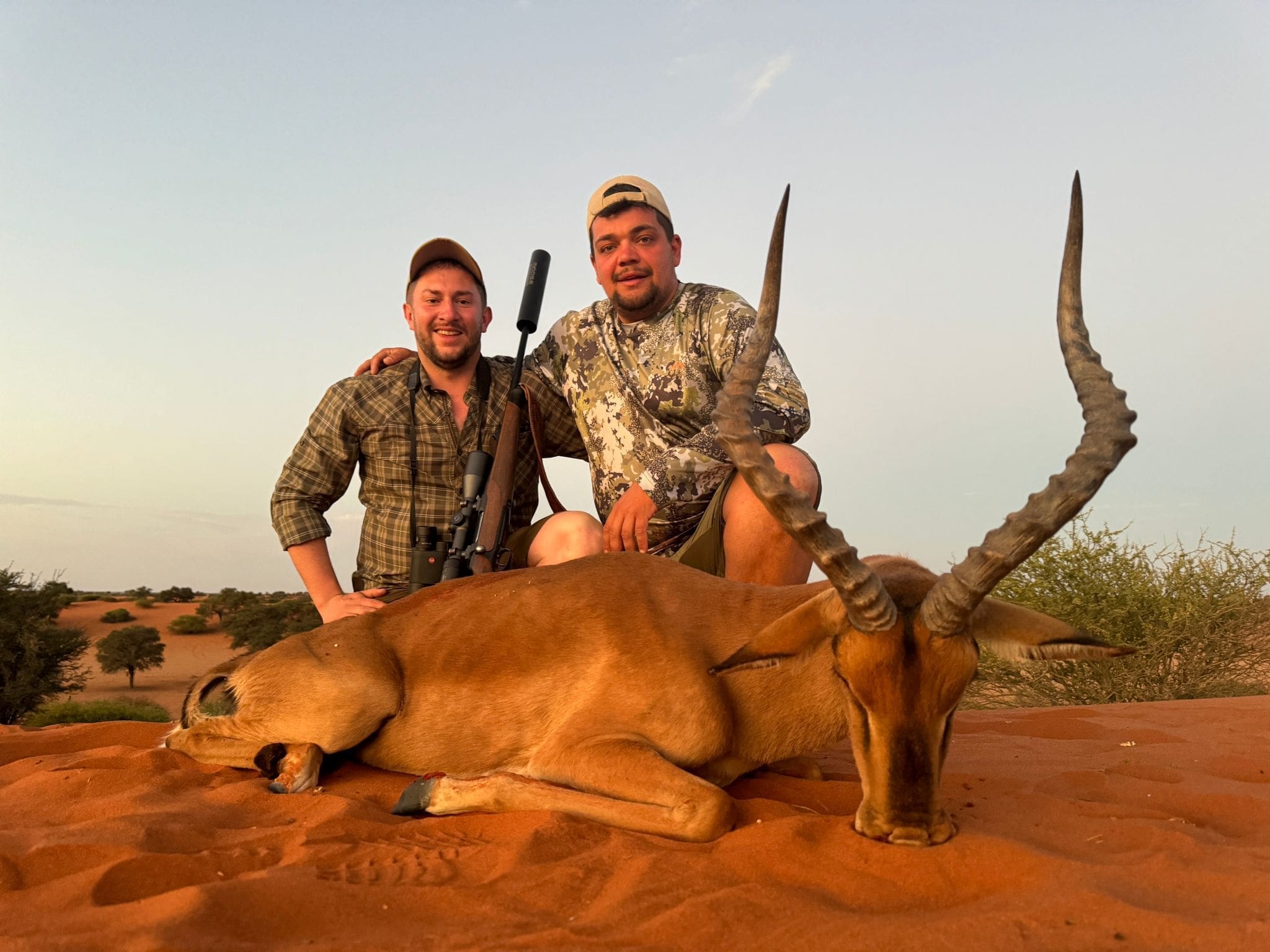
Arkadiusz Malarczyk "The trip to Namibia with The Hunting Hub exceeded my expectations. Impala, oryx, and other African species in their natural habitat, excellent logistics, and the vast knowledge of the local PHs. It was a real adventure of a lifetime, and definitely not my last trip to Africa."
Michael Schmiele - Germany
The roebuck hunt during the rut was perfectly timed and professionally guided. Great knowledge of the area and animal behavior resulted in real hunting opportunities. The Hunting Hub proved to be a reliable and highly professional outfitter.”
Jonathan - DaniaaJonathan - Denmark
An der von The Hunting Hub organisierten Drückjagd teilzunehmen war ein echtes Highlight. Hervorragende Organisation, hohe Sicherheitsstandards und außergewöhnlich viel Wild auf den Treiben
Peter Veerland - Netherlands
De muflonenjacht in Tsjechië met The Hunting Hub was een uitzonderlijke ervaring. Prachtige bergachtige jachtgebieden, sterke populaties muflons en zeer professionele begeleiding. Alles was perfect georganiseerd en het niveau van de jacht was bijzonder hoog. Absoluut een aanrader voor elke veeleisende jager
Contact us and ask about hunting with The Hunting Hub
Are you looking for an unforgettable hunting trip? Contact us via the form or by email/phone. We will listen to your needs and create the best offer for you.
We are here to answer your questions

Jakub Filip Jabłoński DE / ENG / POL
CEO of The Hunting Hub
 We will go on an adventure