Blue wildebeest
The blue wildebeest is a massive African antelope with a distinctive silhouette, gray-blue coloration with dark vertical stripes, and powerful, widely spaced horns in both sexes. It is distinguished by its stocky physique with a prominent chest, long chin, a mane running along the nape of the neck and a distinctive profanity on the side resembling the silhouette of a buffalo. Hunting the blue wildebeest is the essence of classic African safari, requiring the ability to shoot accurately at various distances, knowledge of herd behavior and the ability to quickly assess trophy quality in the dynamic conditions of open savannas.
Blue wildebeest
All offers
 Kalahari
Hunting map
Where do you hunt blue wildebeest?
The blue wildebeest is found in vast areas of eastern and southern Africa, inhabiting open savannas and grassy plains from Kenya and Tanzania in the north to South Africa in the south. The species is found in Kenya, Tanzania, Uganda, Rwanda, Mozambique, Malawi, Zambia, Zimbabwe, Botswana, Namibia, Angola, South Africa and the southern part of the Democratic Republic of Congo. Blue wildebeest are famous for having the largest land mammal migration in the world, moving seasonally between the Serengeti ecosystem in Tanzania and the Masai Mara in Kenya in numbers exceeding 1.5 million individuals. Tanzania offers spectacular blue wildebeest hunting in classic safari areas like the Serengeti, Selous, Ruaha and Maswa, where it is possible to hunt the huge bulls in their natural habitat with the opportunity to observe the great migration. Kenya, although it has banned commercial hunting, has historically been one of the most important destinations. South Africa provides well-organized hunting in the provinces of Limpopo, North West, Northern Cape and Free State with professional infrastructure of hunting ranches. Zimbabwe offers hunts in spectacular areas like the Zambezi Valley, Savé Valley and Lowveld with the possibility of combining with other Big Game species. Botswana and Namibia provide hunting in the natural environments of the Kalahari and Namib deserts with unique landscapes. Zambia offers hunting in the Luangwa and Kafue valleys with traditional walking safari character. All of these destinations combine an abundant population of blue wildebeest, a variety of landscapes from open plains to the rare acacia bush and the opportunity for spectacular trophy hunting as part of a comprehensive African safari.

Hunting calendar
When to hunt blue wildebeest?
The blue wildebeest hunting season varies by country and region, but generally lasts most of the year excluding the rainy season. In Tanzania, the main season is from July to October and a shorter season from January to March, avoiding the long rains from March to May and the short rains in November-December. July and August is the peak season when the great migration moves north, offering spectacular hunting opportunities. In South Africa, the optimal period is from April to September, with winter (June-August) as the peak season, when visibility is excellent, animals concentrate around water sources, and comfortable temperatures favor hunting. Zimbabwe and Zambia offer the best conditions from May to October during the dry season, when wildebeest congregate around rivers and water holes. Botswana has its peak season from April to October, avoiding the rainy season from November to March. Namibia allows hunting most of the year, although the best time is from May to September. Blue wildebeest are most active during the early mornings and late afternoons, feeding on grassy plains and moving between pastures and water sources.
When planning to hunt blue wildebeest, it is crucial to understand their herd lifestyle and seasonal migrations. The wildebeest live in large herds of dozens to hundreds of individuals, often in the company of zebras and other antelope, which provides better protection from predators. Mature bulls occupy and defend small territories within migratory areas during the mating season in an attempt to stop herds of females, making them more predictable targets. Older bulls often have a solitary or small group lifestyle on the periphery of the main herds, making them preferred targets for selective shooting. Hunting is mainly done by stalking in open savannas, which requires the use of terrain, scattered acacia trees, termites and natural hollows as cover. Blue wildebeest are characterized by good eyesight and a strong herd instinct, where the alarm of one individual immediately alerts the entire herd, requiring the hunter to be patient and plan his approach precisely. Cooperation with an experienced professional hunter (PH) is essential for proper identification of mature bulls and evaluation of trophy quality – horns in terms of width of spacing, length, base thickness and shape of curvature. Shooting is often done at distances of 100 to 250 meters using shooting sticks or shooting from a sitting position, requiring a stable position and precise aiming at the vital zone behind the shoulder blade. Blue wildebeest are large, hardy animals requiring proper gun calibration (minimum .300 magnum or equivalent) and proper shot placement for humane acquisition. Weather conditions, especially wind direction, are crucial, as wildebeest have an excellent sense of smell and can sense danger from great distances. Blue wildebeest hunts are often part of larger safari packages that include other plains species like zebra, impala, kudu and gemsbok, allowing for a comprehensive experience of the diversity of African wildlife. The wildebeest meat is prized as an excellent source of food for local communities and safari staff. Regardless of location or timing, hunting blue wildebeest requires adherence to hunting ethics, selective shooting consistent with population management principles, and respect for this iconic species of African savannas, which plays a key role in the ecosystem as the main prey for large predators and a key component of the spectacular great migration.
STY
LUT
MAR
PAŹ
LIS
GRU
Testimonies
The best hunt with us

See what customers who have hunted with us say about us.


Janusz K. - Polska

“The red deer hunt with The Hunting Hub was perfectly organized from start to finish. The hunting grounds were well chosen, the guides had excellent knowledge of the area and were very professional. The excitement during the rut and the quality of the trophy met all my expectations. I definitely recommend it.”
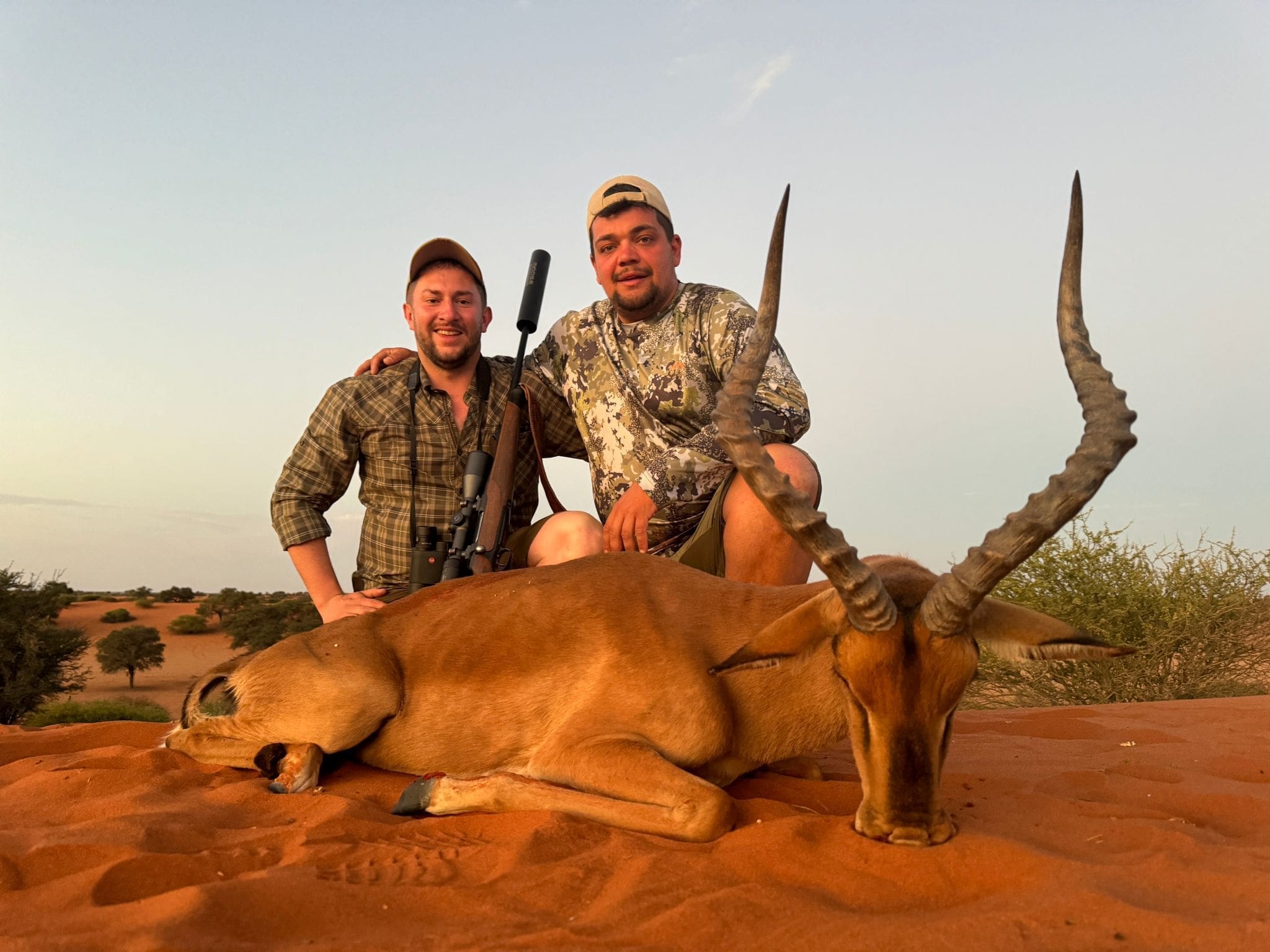
Arkadiusz Malarczyk "The trip to Namibia with The Hunting Hub exceeded my expectations. Impala, oryx, and other African species in their natural habitat, excellent logistics, and the vast knowledge of the local PHs. It was a real adventure of a lifetime, and definitely not my last trip to Africa."
Michael Schmiele - Germany
The roebuck hunt during the rut was perfectly timed and professionally guided. Great knowledge of the area and animal behavior resulted in real hunting opportunities. The Hunting Hub proved to be a reliable and highly professional outfitter.”
Jonathan - DaniaaJonathan - Denmark
An der von The Hunting Hub organisierten Drückjagd teilzunehmen war ein echtes Highlight. Hervorragende Organisation, hohe Sicherheitsstandards und außergewöhnlich viel Wild auf den Treiben
Peter Veerland - Netherlands
De muflonenjacht in Tsjechië met The Hunting Hub was een uitzonderlijke ervaring. Prachtige bergachtige jachtgebieden, sterke populaties muflons en zeer professionele begeleiding. Alles was perfect georganiseerd en het niveau van de jacht was bijzonder hoog. Absoluut een aanrader voor elke veeleisende jager
Contact
Contact us and ask about hunting with The Hunting Hub
Are you looking for an unforgettable hunting trip? Contact us via the form or by email/phone. We will listen to your needs and create the best offer for you.
We are here to answer your questions

Jakub Filip Jabłoński DE / ENG / POL
CEO of The Hunting Hub
 contact@thehuntinghub.com
 +48 570 731 282
 Warsaw, Poland
01
Fill out the form
02
We will call you back within 24 hours
03
We will discuss your requirements
04
We will present you with an offer
 We will go on an adventure
Animal species