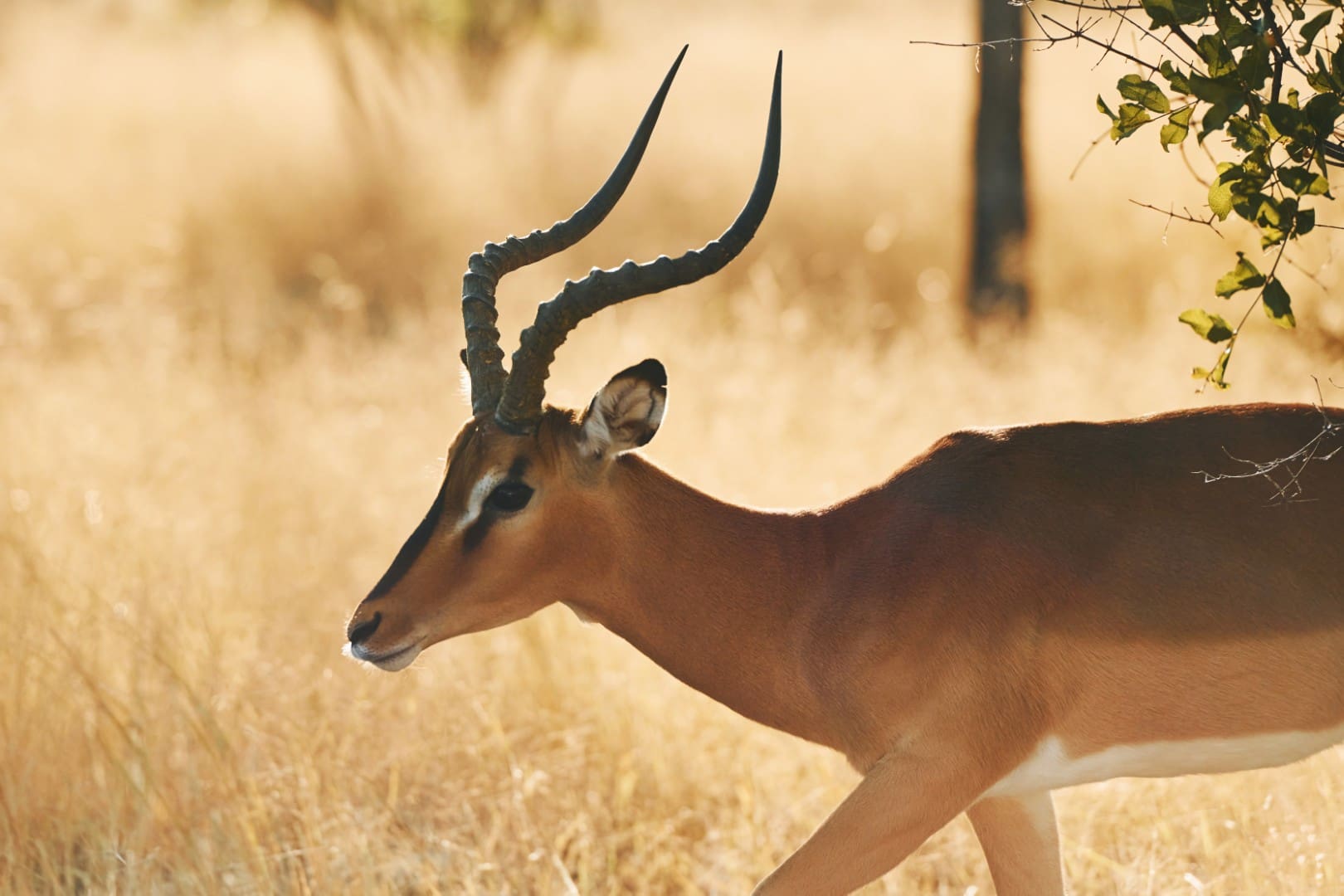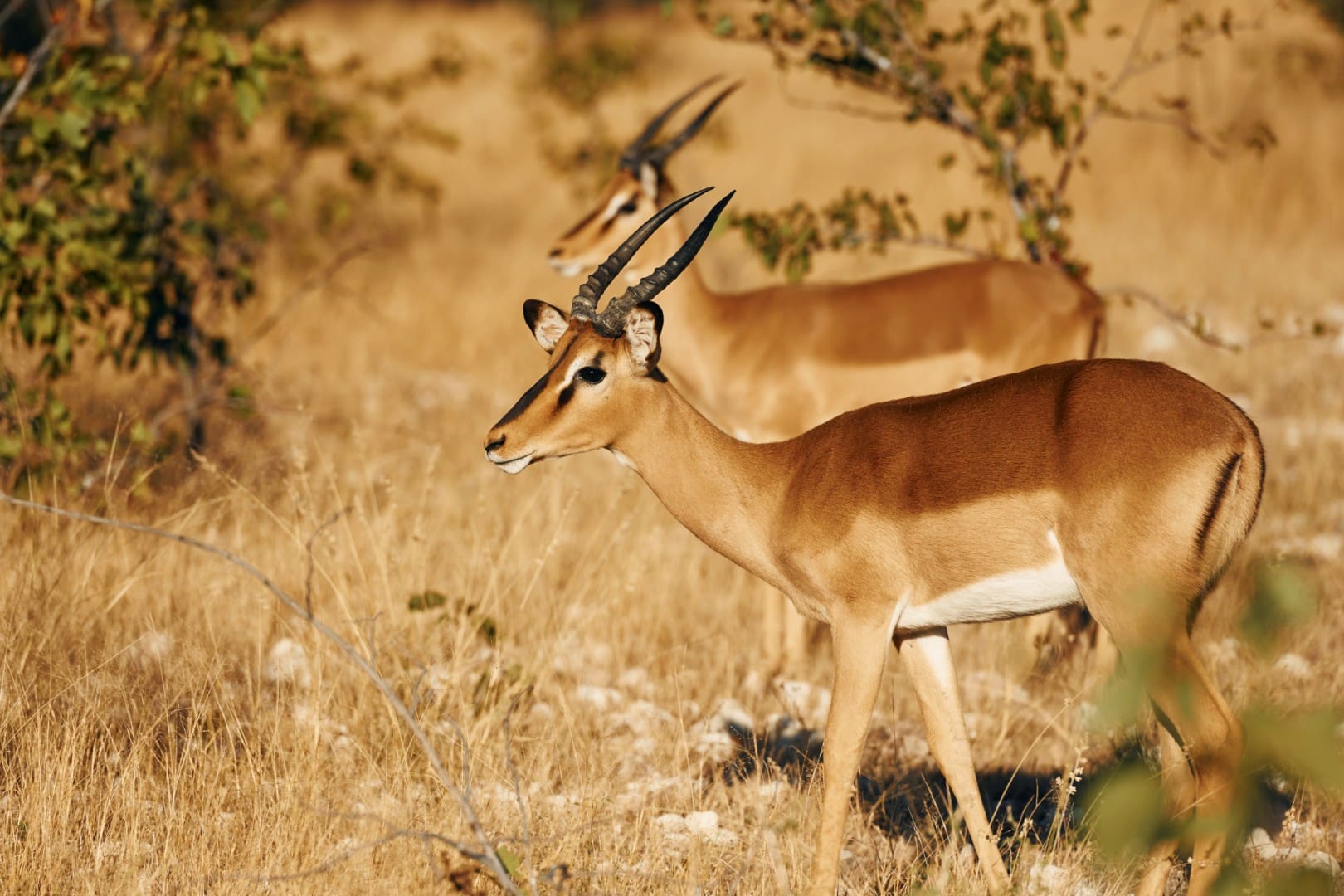
Duiker
Duiker are a diverse group of small to medium-sized antelope in the genera Cephalophus and Sylvicapra, prized by hunters for their species diversity, agility and the challenge of hunting in dense thickets and forests. They are characterized by a compact body, rounded backs, short legs, straight or slightly curved horns in both sexes or only in males, and a distinctive body position with the head lowered, which gave the species its name (duiker from Afrikaans “diver”). Hunting duikers requires the ability to move quietly through dense vegetation, react quickly to flashing targets and shoot accurately in difficult conditions of limited visibility, making the experience a fascinating challenge for hunters who specialize in bush species.
Duiker
All offers
 Kalahari
Hunting map
Where do you hunt for a duiker?
Duikers come in more than 20 species distributed throughout sub-Saharan Africa, inhabiting a variety of habitats from tropical rainforests to dry savannas. The common duiker (Sylvicapra grimmia) has the widest range, occurring in South Africa, Namibia, Botswana, Zimbabwe, Zambia, Mozambique, Malawi, Tanzania, Kenya, Uganda, Rwanda, Angola and scattered populations in West and Northeast Africa. Forest duikers (Cephalophus) mainly inhabit the equatorial and montane forests of Central and West Africa, encompassing species such as blue duiker, red duiker, yellow-throated duiker, black-throated duiker, black-bellied duiker, Yentinka duiker, Ogilby’s duiker, white-bellied duiker and others. South Africa offers excellent hunting opportunities for the common duiker in the Eastern Cape, Limpopo, Mpumalanga, KwaZulu-Natal and Western Cape provinces, where the species is common in brushy areas, river valleys and forest edges. Tanzania provides hunting for both the common duiker and forest species like the blue duiker, red duiker and Adersa in the Selous, Ruaha and coastal forest areas. Cameroon, Central African Republic and Congo offer unique hunting opportunities for rare forest duiker species in tropical rainforests, although availability is limited and requires specialized outfitters. Zimbabwe, Zambia and Mozambique allow hunting of the common duiker in natural bush and miombo habitats. Namibia offers hunting in dry savannahs and mopane bush. All of these destinations combine a diversity of duiker species, from common to extreme rare forest forms, spectacular landscapes from open savannas to dense forests, and the opportunity to acquire unique trophies of small antelope as part of a comprehensive African safari.

Hunting calendar
When to hunt for a duiker?
The duiker hunting season varies by country and species. In South Africa, hunting for the common duiker is available year-round, although the optimal period is during the dry months of April to September, when visibility in brushy areas is better and the animals are more likely to be out in the open. Early autumn and winter, especially May through August, offer comfortable temperatures and lower vegetation making it easier to locate in dense bush. In Tanzania, the main season for all duiker species is from July to October and January to March, avoiding the rainy seasons. July and August is the peak season with excellent visibility and active animals. In Central and West Africa, the optimal period for forest duiker species is the relatively drier months of December through February and June through August, when penetration of dense rainforest is possible, although conditions remain challenging. Duikers are mainly active during the early mornings, evenings and at night, being twilight and nocturnal feeders, requiring hunting to begin before dawn and continue until dusk.
When planning a duiker hunt, it is crucial to understand their solitary, territorial lifestyle and specific behaviors. Duikers usually live alone or in pairs, occupying small territories in dense thickets, forest edges, river valleys and overgrown rocky areas, where they feed on leaves, fruits, flowers and occasionally small invertebrates. A characteristic feature of duikers is their escape behavior – when threatened, they plunge deep into the brush with a series of rapid, zigzagging leaps, which gave the species its name. Hunting is mainly done by patiently stalking in the dense bush, listening for distinctive sounds of movement in the scrub, and using travel routes between feeding and resting areas. Duikers create distinct paths and tunnels in dense vegetation that experienced trackers can identify and exploit. Cooperation with a professional hunter (PH) and local trackers is essential for locating duikers in their preferred habitats, recognizing the species by size, coloration and horn shape, and making the right approach. Duikers have excellent hearing and smell with relatively poorer eyesight, requiring the hunter to be absolutely quiet, use wind direction and slow, controlled movements. Shooting a duiker is technically demanding due to its small size (body weight ranging from 4 kg in the smallest forest species to 25 kg in the common duiker), limited visibility in dense vegetation and instantaneous escape response. Shots are usually taken at short distances of 20 to 60 meters, often at flashing targets between thickets, requiring quick reaction, stable positioning and precise aiming at a small vital zone. Preference is given to lightweight rifles in small calibers (.223, .243, 6.5mm, .270) with fast low-magnification optical sights for a wide field of view and quick targeting. Ammunition should be selected to ensure humane acquisition without excessive damage to the miniature trophy. Duiker horns, especially in forest species, are relatively small (5 to 15 cm), but characteristic of each species and highly valued by collectors of small antelope. Complete preparations or montages of duiker skulls are unique exhibits due to the variety of sizes and shapes between species. The ethical aspects of duiker hunting are relatively uncontroversial for common species like the common duiker, which has stable populations and is managed as a game species. However, rare forest species like the Yentinka duiker, black-faced duiker and Adersa duiker are protected and hunting them is strictly limited or banned due to habitat threats and poaching for bushmeat. All legal duiker hunting is done within limits and management plans, with preference for males and protection for females with young. Duiker meat is prized as tender and is an important source of protein for local communities. Duiker hunts are often part of larger safari packages, adding a unique variety of small antelope to collections without the need for dedicated expeditions. For hunters collecting African antelope, collecting a variety of duiker species presents a fascinating challenge due to their diversity and challenging hunting conditions. Regardless of the species and location, duiker hunting requires adherence to hunting ethics, selective shooting, patience and skill in navigating through dense thickets, and respect for these small but highly adaptable antelope that play an important role in African bush and forest ecosystems.
Testimonies
The best hunt with us

See what customers who have hunted with us say about us.


Janusz K. - Polska

“The red deer hunt with The Hunting Hub was perfectly organized from start to finish. The hunting grounds were well chosen, the guides had excellent knowledge of the area and were very professional. The excitement during the rut and the quality of the trophy met all my expectations. I definitely recommend it.”
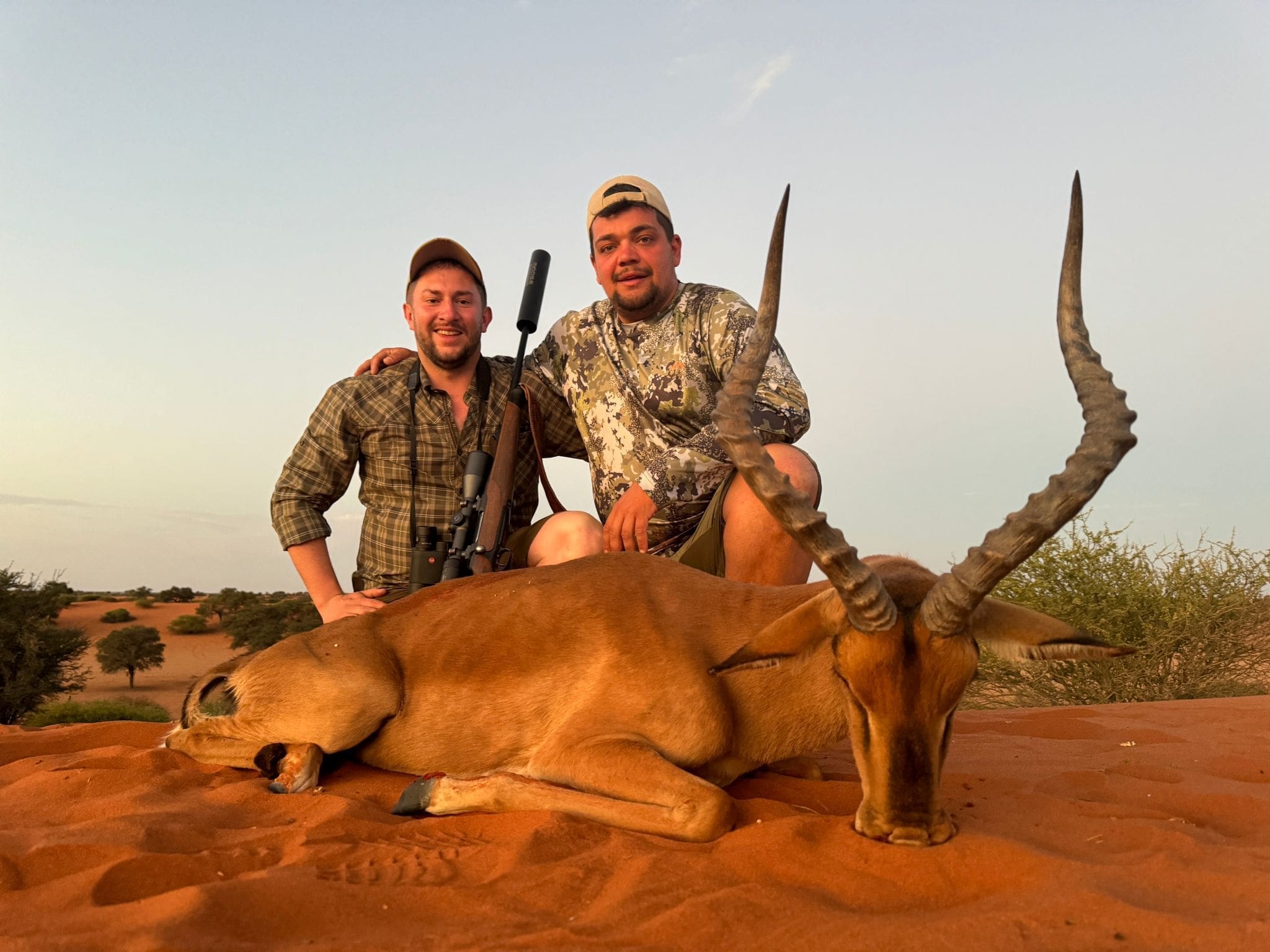
Arkadiusz Malarczyk "The trip to Namibia with The Hunting Hub exceeded my expectations. Impala, oryx, and other African species in their natural habitat, excellent logistics, and the vast knowledge of the local PHs. It was a real adventure of a lifetime, and definitely not my last trip to Africa."
Michael Schmiele - Germany
The roebuck hunt during the rut was perfectly timed and professionally guided. Great knowledge of the area and animal behavior resulted in real hunting opportunities. The Hunting Hub proved to be a reliable and highly professional outfitter.”
Jonathan - DaniaaJonathan - Denmark
An der von The Hunting Hub organisierten Drückjagd teilzunehmen war ein echtes Highlight. Hervorragende Organisation, hohe Sicherheitsstandards und außergewöhnlich viel Wild auf den Treiben
Peter Veerland - Netherlands
De muflonenjacht in Tsjechië met The Hunting Hub was een uitzonderlijke ervaring. Prachtige bergachtige jachtgebieden, sterke populaties muflons en zeer professionele begeleiding. Alles was perfect georganiseerd en het niveau van de jacht was bijzonder hoog. Absoluut een aanrader voor elke veeleisende jager
Contact
Contact us and ask about hunting with The Hunting Hub
Are you looking for an unforgettable hunting trip? Contact us via the form or by email/phone. We will listen to your needs and create the best offer for you.
We are here to answer your questions

Jakub Filip Jabłoński DE / ENG / POL
CEO of The Hunting Hub
 contact@thehuntinghub.com
 +48 570 731 282
 Warsaw, Poland
01
Fill out the form
02
We will call you back within 24 hours
03
We will discuss your requirements
04
We will present you with an offer
 We will go on an adventure
Animal species