Warthog
The warthog is a distinctive African wild pig with prominent facial warts and impressive tusks, prized by hunters for the uniqueness of its trophy and the exciting challenge of hunting this wary and potentially dangerous suid representative. It is characterized by a massive head with large skin warts under the eyes and on the muzzle, a gray-brown to black coloration with thinned hair, long tusks in males reaching up to 60 centimeters in length curved upward, and a distinctive way of moving on its front knees while foraging. Hunting the warthog is a classic African safari experience, requiring quick reactions, precise shooting and an awareness of the power and danger of this animal capable of inflicting serious injury with its sharp fangs.
Warthog
All offers
 Kalahari
Hunting map
Where do you hunt for a lump?
The warthog is found in vast areas of sub-Saharan Africa, inhabiting virtually every country from the Sahel in the north to South Africa in the south. The species inhabits Tanzania, Kenya, Uganda, Ethiopia, Somalia, Sudan, South Sudan, Zambia, Malawi, Mozambique, Zimbabwe, Botswana, Namibia, Angola, South Africa, Eswatini, and vast areas of West and Central Africa including Senegal, Burkina Faso, Mali, Niger, Nigeria, Cameroon, Central African Republic and Chad. South Africa offers the most accessible and professionally organized guzca hunts in the provinces of Limpopo, North West, Northern Cape, Eastern Cape, Mpumalanga and KwaZulu-Natal, where the species is common and often hunted as part of safari packages. Tanzania provides classic guzzler hunts in virtually all hunting areas – Selous, Ruaha, Maswa, Moyowosi and northern regions – where the species is abundant and achieves excellent tusk quality. Zimbabwe offers hunting in the Save Valley, Lowveld, Chizarira and Zambezi Valley areas with high trophy quality. Zambia provides hunting in the Luangwa and Kafue valleys with traditional safari character. Namibia provides hunting in a variety of landscapes from the Kalahari to the central plains. Botswana offered excellent hunting before commercial safaris were banned. All of these destinations combine an abundance of guzzler populations, a variety of landscapes and the opportunity for a distinctive tusk trophy as an integral part of any African safari.

Hunting calendar
When to hunt for a warthog?
The hunting season for the nodule in most African countries is year-round, as the species is abundant and not subject to strict seasonal regulations. In South Africa and Namibia, hunting is available year-round, although the optimal period is during the dry months of April to September, when visibility is excellent and nodules concentrate around water sources and watering holes. Early autumn and winter, especially from May to August, offer comfortable temperatures and the most predictable animal behavior. In Tanzania, the main season runs from July to October and January to March, with July, August and September as the peak season. Zimbabwe and Zambia offer the best conditions from May to October during the dry season. The warthog is mainly active during the early mornings and late afternoons, with long periods of resting in burrows or shade during peak heat, often entering burrows backwards with its head facing outward as a defense strategy against predators.
When planning to hunt a warthog, it is crucial to understand its social behavior and survival strategies in an environment full of predators. Nodules live in family groups consisting of females with their young, while adult males often lead solitary lifestyles or form small bachelor groups, especially outside the mating season. They prefer open savannas, grassy plains and areas with access to ground burrows, which they use as shelter from predators and extreme heat. A characteristic feature of the nodule is its posture when foraging – kneeling on its front knees and using its mouth to dig up roots, tubers and root-like plants. When threatened, the nodule escapes with a characteristic run with its tail raised high like an antenna, reaching speeds of up to 50 km/h. Hunting is carried out by various methods – stalking in open savannas, pulpit hunting over water holes or burrows, where nodules appear regularly. The warthog is characterized by good eyesight, excellent sense of smell and hearing, and high alertness due to being prey for all large predators. Working with a professional hunter (PH) allows the identification of mature males with the best tusks. The evaluation of the trophy focuses on the length of the tusks along the curvature (with 12+ inches as an excellent trophy, 14+ inches as outstanding, and 16+ inches as the record class), the thickness of the base, the shape of the curvature and the symmetry between the left and right tusks. Older males have darker, often black coloration and more massive tusks. Shooting a warthog requires precision – a vital zone behind the shoulder or a neck/head shot is preferred, at distances usually between 80 and 150 meters. Light to medium calibers are used (.243 Win, .270 Win, .30-06, 7mm Rem Mag) with good expansive ammunition. The warthog is a relatively hardy animal, and a wounded individual can be dangerous with its sharp fangs capable of inflicting serious injury. The ethical aspects of hunting the warthog are uncontroversial – the species has very stable and numerous populations throughout its range, is not endangered and plays an important role in ecosystems. Nodule tusks are a distinctive trophy, often mounted as pairs on posters or in full skull preparations. Nodule meat is tasty and prized, although it requires proper preparation. Nodule hunting is an integral part of virtually every African safari, offering a dynamic experience and a distinctive trophy that combines the elegance of curved tusks with the unique appearance of this iconic species of African savannas.
Testimonies
The best hunt with us

See what customers who have hunted with us say about us.


Janusz K. - Polska

“The red deer hunt with The Hunting Hub was perfectly organized from start to finish. The hunting grounds were well chosen, the guides had excellent knowledge of the area and were very professional. The excitement during the rut and the quality of the trophy met all my expectations. I definitely recommend it.”
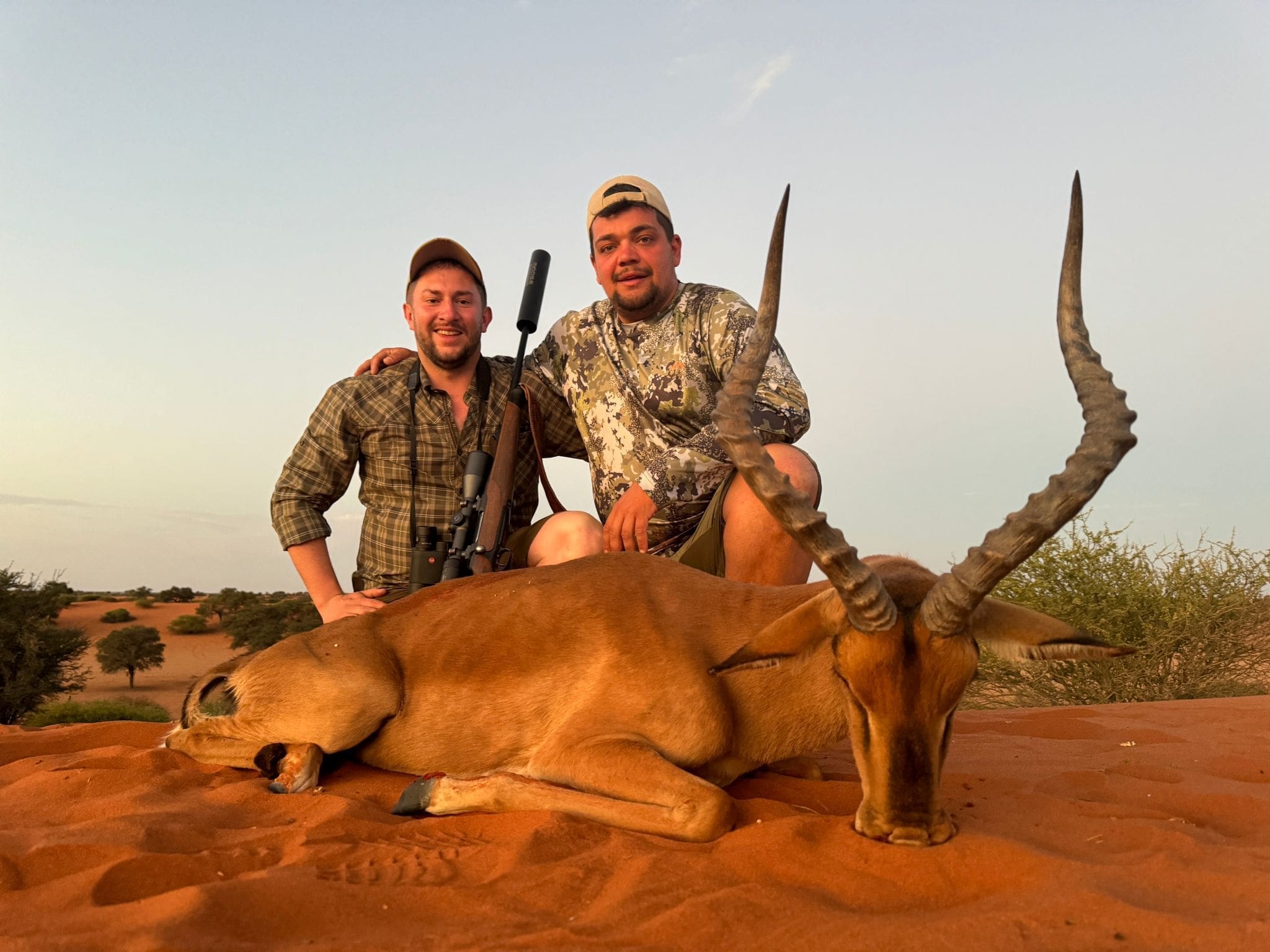
Arkadiusz Malarczyk "The trip to Namibia with The Hunting Hub exceeded my expectations. Impala, oryx, and other African species in their natural habitat, excellent logistics, and the vast knowledge of the local PHs. It was a real adventure of a lifetime, and definitely not my last trip to Africa."
Michael Schmiele - Germany
The roebuck hunt during the rut was perfectly timed and professionally guided. Great knowledge of the area and animal behavior resulted in real hunting opportunities. The Hunting Hub proved to be a reliable and highly professional outfitter.”
Jonathan - DaniaaJonathan - Denmark
An der von The Hunting Hub organisierten Drückjagd teilzunehmen war ein echtes Highlight. Hervorragende Organisation, hohe Sicherheitsstandards und außergewöhnlich viel Wild auf den Treiben
Peter Veerland - Netherlands
De muflonenjacht in Tsjechië met The Hunting Hub was een uitzonderlijke ervaring. Prachtige bergachtige jachtgebieden, sterke populaties muflons en zeer professionele begeleiding. Alles was perfect georganiseerd en het niveau van de jacht was bijzonder hoog. Absoluut een aanrader voor elke veeleisende jager
Contact
Contact us and ask about hunting with The Hunting Hub
Are you looking for an unforgettable hunting trip? Contact us via the form or by email/phone. We will listen to your needs and create the best offer for you.
We are here to answer your questions

Jakub Filip Jabłoński DE / ENG / POL
CEO of The Hunting Hub
 contact@thehuntinghub.com
 +48 570 731 282
 Warsaw, Poland
01
Fill out the form
02
We will call you back within 24 hours
03
We will discuss your requirements
04
We will present you with an offer
 We will go on an adventure
Animal species