Dikdik
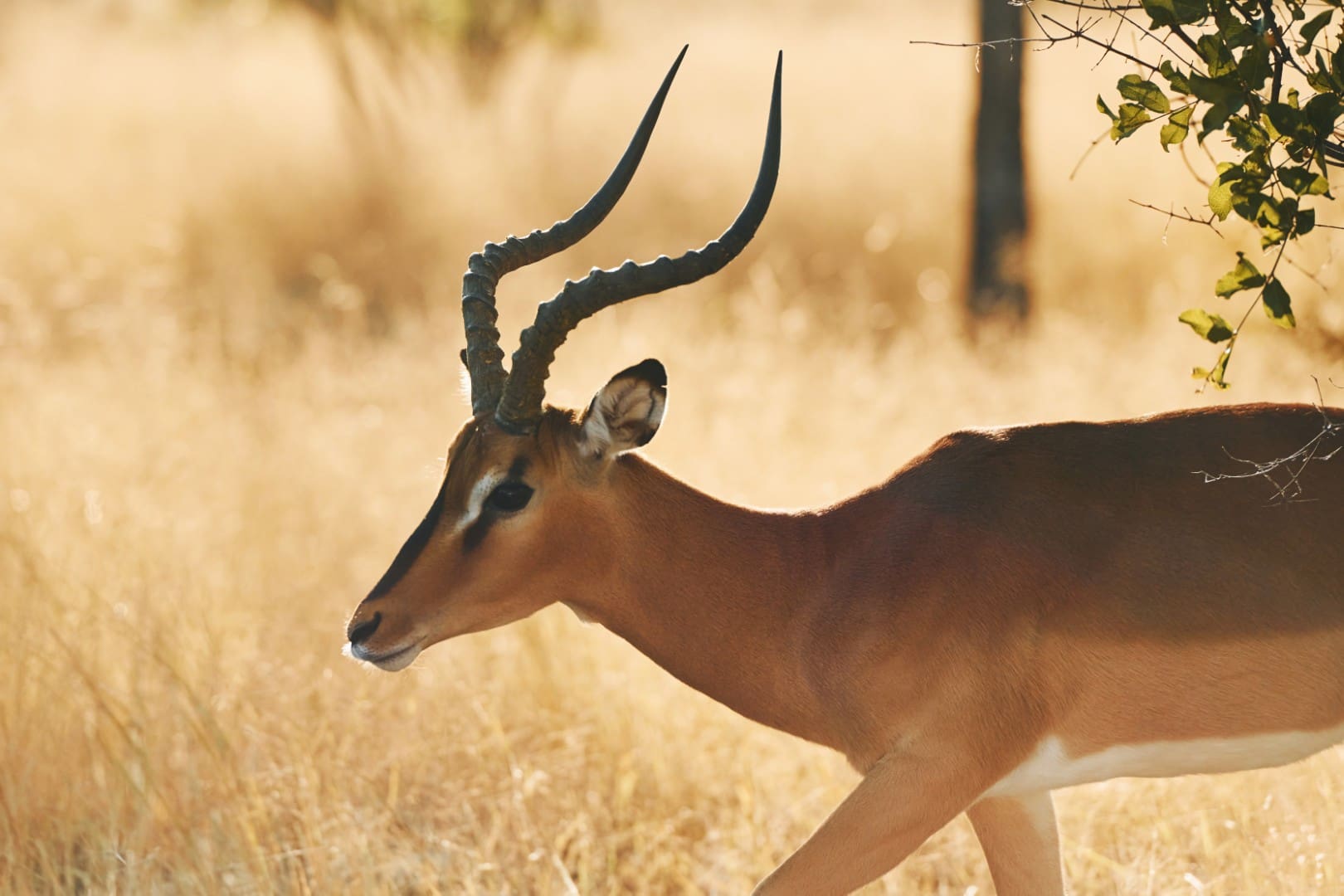
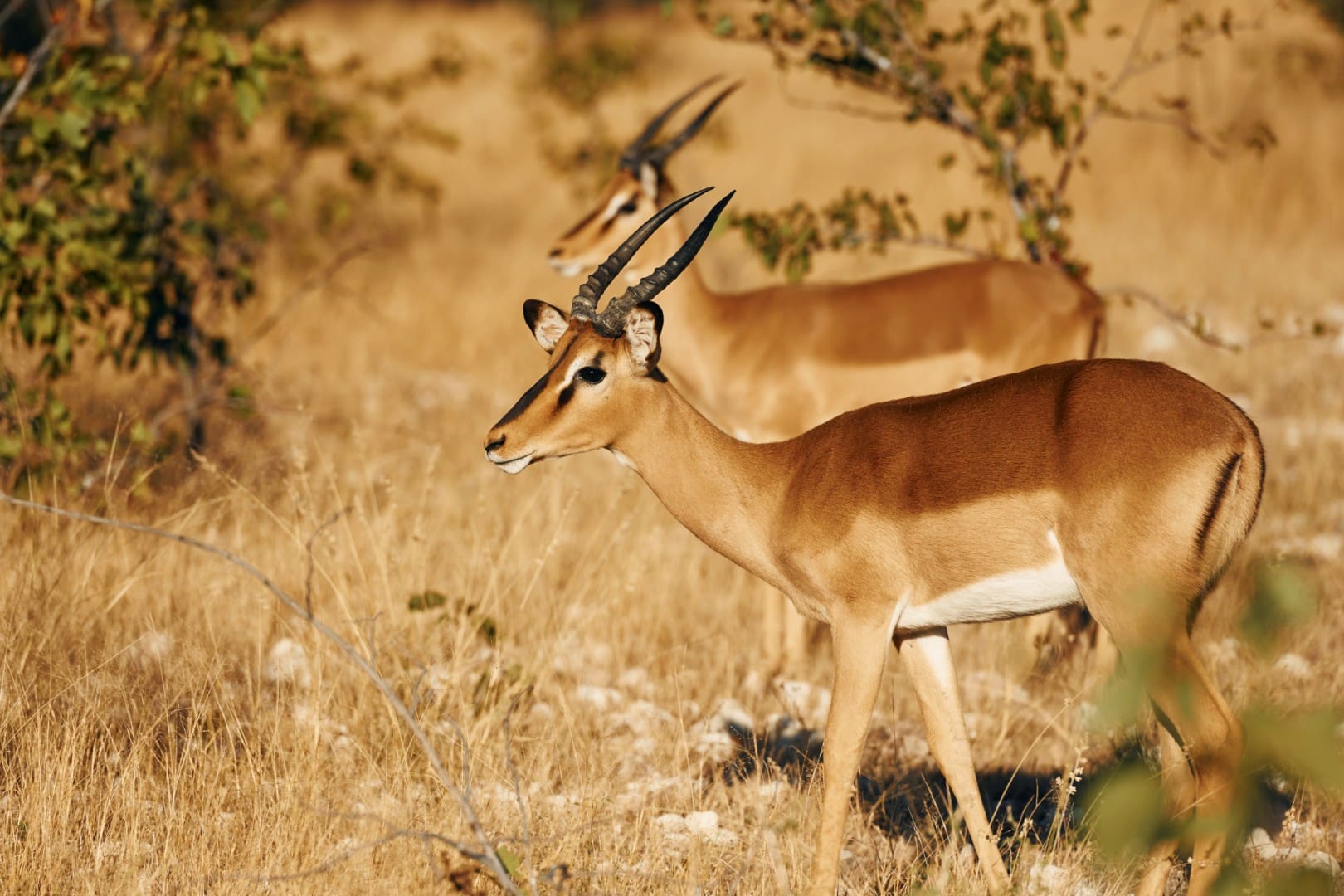
Dikdik is a miniature antelope of the genus Madoqua, prized by hunters for its gentleness, charm and the unique challenge of hunting one of Africa’s smallest ungulates. It is characterized by its extremely small size (height at withers 30-40 cm, body weight 3-6 kg), elongated mobile snout resembling a short trunk, large dark eyes and miniature straight horns in males reaching only 7-12 centimeters in length. Hunting dikdik requires exceptional shooting precision, patience and the ability to locate these skittish animals in the dense bush, making the experience a fascinating challenge for hunters who specialize in small African species.
Dikdik
All offers
 Kalahari
Hunting map
Where do you hunt for dikdik?
Dikdik comes in four main species distributed throughout East and Southwest Africa. The Kirk’s Dikdik inhabits vast areas from southern Somalia, through Kenya, Tanzania, Uganda, to Namibia and southwestern Angola. The Günther’s dikdik is found in Ethiopia, Somalia, northern Kenya and South Sudan. The silver dikdik inhabits southeastern Ethiopia and Somalia, and the Salta dikdik inhabits dry northwestern Somalia. Tanzania offers excellent hunting opportunities for the Kirk’s dikdik in classic safari areas like Selous, Ruaha, Maswa and the northern regions, where the species is common in dense acacia bush and overgrown areas. Kenya, although it has banned commercial hunting, has historically been an important destination for the species. Namibia provides dikdik hunting in the northern and central regions in dry savanna and mopane bush environments, often as an additional species in safari packages. Ethiopia offers unique hunting opportunities for Günther’s dikdik and silver dikdik in dry, mountainous eastern regions. Zimbabwe and Southern Tanzania allow hunting in natural bush habitats with professional guidance. All of these destinations combine abundant dikdik populations, a variety of landscapes from dense bush to open savannas with scattered scrub, and the opportunity to acquire a miniature but highly distinctive trophy as part of a comprehensive African small-game species safari experience.

Hunting calendar
When to hunt for dikdik?
The dikdik hunting season in East Africa usually coincides with the general safari seasons, with the optimal period falling in the dry seasons. In Tanzania, the main season runs from July to October and a shorter season from January to March, avoiding the long rains of March to May and the short rains of November-December. July, August and September are the peak season, when visibility is excellent, vegetation is low and dikdiki are more visible in the open spaces between the scrub. In Namibia, the optimal period is during the dry months of May to October, especially June, July and August, when comfortable temperatures and low vegetation make it easier to locate these miniature antelopes in the bush. In Ethiopia, the best period is the dry season from October to March in the eastern regions. Dikdiki are mainly active during the early morning and late afternoon hours, avoiding foraging during the peak heat, when they hide in dense bushes and the shade of trees, taking advantage of their unusual metabolism that allows them to survive without drinking water thanks to moisture from plants.
When planning a dikdik hunt, it is crucial to understand their monogamous, territorial lifestyle and extreme skittishness. Dikdiks live in pairs occupying small territories of 5 to 30 hectares, which are strictly defended by the male from other males. Pairs remain together throughout their lives, feeding and resting together in dense thickets of acacia, commifora and other shrubby plants. The distinctive “zik-zik” sound made by dikdiks during alarm gave the species its name, and often betrays their presence to the hunter. Dikdik hunting is mainly done by patient stalking in dense bush, which requires extreme silence, slow movements and the use of every available hiding place. Dikdiks are characterized by excellent hearing, smell and sight, and their escape response is instantaneous – at the slightest threat they disappear into the bush with a series of zigzag leaps. Cooperation with an experienced professional hunter (PH) and trackers is essential for locating dikdiks in their preferred habitat, identifying males by their miniature horns, and making the right approach in difficult terrain. Shooting dikdik is extremely technically demanding due to the miniature size of the target – the vital zone is only the size of a grapefruit, requiring absolute precision and stability. Hunting usually takes place at distances of 30 to 80 meters using lightweight rifles in small calibers (.223, .243, 6.5mm) with expansion control ammunition to maintain the integrity of the miniature trophy. The shot must be placed accurately into the vital zone behind the shoulder blade, as even minimal deviation can cause damage to the trophy or the wounded animal’s escape into untraversed brush. Many hunters prefer the shooting position from poles or supports for maximum stability. The dikdik requires special delicacy during trophy preparation due to the miniature size of the horns and skull, and professional preparations of full or mounted skulls make unique collection pieces. The ethical aspects of dikdik hunting are relatively uncontroversial, as the species has stable and abundant populations throughout most of its range, is not endangered, and plays a role as a game species supporting safari economics. Hunting usually focuses on mature males, protecting pair structure and population reproduction. Dikdik meat, though small in quantity, is prized as tender and tasty. Many hunters treat dikdik as a “bonus” species during larger safaris, adding a unique miniature trophy to the collection without the need for a dedicated expedition. Dikdik hunting also offers an excellent opportunity to develop stalking skills in the dense bush and precision shooting at small targets, a valuable experience for any hunter. Regardless of method or location, dikdik hunting requires adherence to hunting ethics, selective shooting of males, and respect for these adorable miniature antelope, which are a distinctive feature of African bush ecosystems and offer a unique, albeit demanding, hunting challenge.
STY
LUT
MAR
KWI
LIS
GRU
Testimonies
The best hunt with us

See what customers who have hunted with us say about us.


Janusz K. - Polska

“The red deer hunt with The Hunting Hub was perfectly organized from start to finish. The hunting grounds were well chosen, the guides had excellent knowledge of the area and were very professional. The excitement during the rut and the quality of the trophy met all my expectations. I definitely recommend it.”
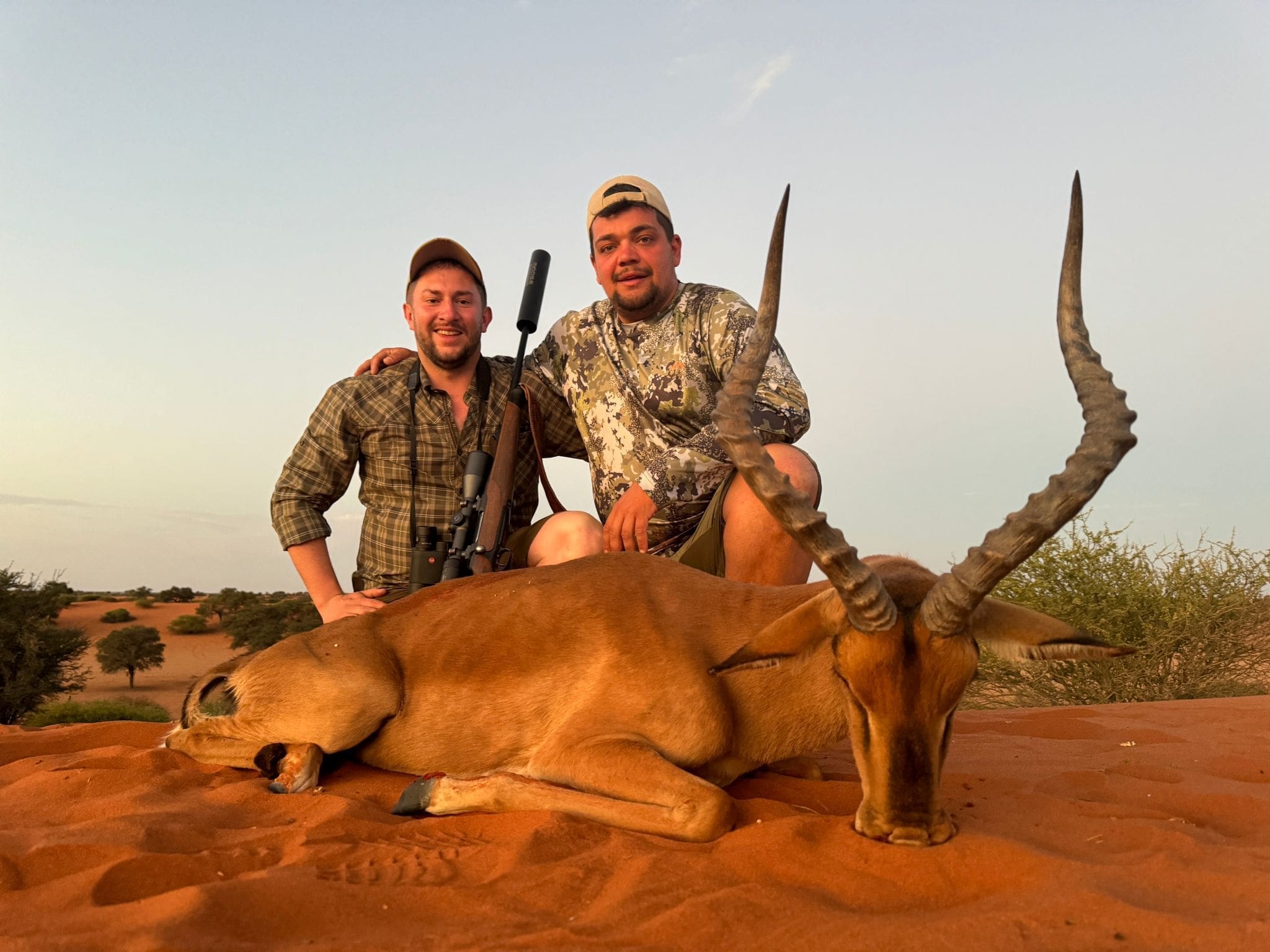
Arkadiusz Malarczyk "The trip to Namibia with The Hunting Hub exceeded my expectations. Impala, oryx, and other African species in their natural habitat, excellent logistics, and the vast knowledge of the local PHs. It was a real adventure of a lifetime, and definitely not my last trip to Africa."
Michael Schmiele - Germany
The roebuck hunt during the rut was perfectly timed and professionally guided. Great knowledge of the area and animal behavior resulted in real hunting opportunities. The Hunting Hub proved to be a reliable and highly professional outfitter.”
Jonathan - DaniaaJonathan - Denmark
An der von The Hunting Hub organisierten Drückjagd teilzunehmen war ein echtes Highlight. Hervorragende Organisation, hohe Sicherheitsstandards und außergewöhnlich viel Wild auf den Treiben
Peter Veerland - Netherlands
De muflonenjacht in Tsjechië met The Hunting Hub was een uitzonderlijke ervaring. Prachtige bergachtige jachtgebieden, sterke populaties muflons en zeer professionele begeleiding. Alles was perfect georganiseerd en het niveau van de jacht was bijzonder hoog. Absoluut een aanrader voor elke veeleisende jager
Contact
Contact us and ask about hunting with The Hunting Hub
Are you looking for an unforgettable hunting trip? Contact us via the form or by email/phone. We will listen to your needs and create the best offer for you.
We are here to answer your questions

Jakub Filip Jabłoński DE / ENG / POL
CEO of The Hunting Hub
 contact@thehuntinghub.com
 +48 570 731 282
 Warsaw, Poland
01
Fill out the form
02
We will call you back within 24 hours
03
We will discuss your requirements
04
We will present you with an offer
 We will go on an adventure
Animal species