Kudu
Kudu is one of the most majestic and prized African antelope, distinguished by the spectacular spiral horns of the males, which are among the most beautiful trophies of the hunting world. It is characterized by its slender, athletic body, gray-brown coloration with distinctive white vertical stripes on the flanks, prominent crest on the nape of the neck and exceptionally long, spirally twisted horns reaching up to 180 centimeters along the spiral in the great kudu. Kudu hunting is the quintessential classic African safari experience, requiring patience, stalking skills in difficult bush terrain and precision shooting, making this species the dream object of every professional hunter.
Kudu
All offers
 Kalahari
Hunting map
Where do you hunt for kudu?
Kudu comes in two species with different geographic ranges. The great kudu (Tragelaphus strepsiceros) inhabits vast areas of eastern and southern Africa, covering Ethiopia, Kenya, Tanzania, Uganda, Zambia, Malawi, Mozambique, Zimbabwe, Botswana, Namibia, Angola, South Africa and isolated populations in Chad and Central Sudan. The small Kudu (Tragelaphus imberbis) is found in East Africa in Ethiopia, Somalia, Kenya, Tanzania, Uganda and South Sudan. South Africa offers the most professionally organized big kudu hunting in the provinces of Limpopo, North West, Northern Cape, Eastern Cape, KwaZulu-Natal and Mpumalanga, with excellent infrastructure of hunting ranches and the opportunity to take spectacular trophies exceeding 60 inches along the spiral. Zimbabwe is renowned for producing some of the largest kudu in the world, particularly in the Lowveld, Save Valley and Matetsi regions, where a combination of genetics and breeding management yields medal-class trophies. Namibia provides hunting in a variety of landscapes from the Kalahari to the mountainous Erongo and Waterberg areas with abundant populations. Tanzania offers classic safari hunts for big kudu in the Selous, Ruaha and Maswa and for small kudu in the northern regions. Zambia allows hunting in the Luangwa and Kafue valleys with traditional walking safari character. Botswana offers hunting in the natural environments of the Kalahari and the Okavango Delta. Ethiopia provides unique small kudu hunting opportunities in the arid eastern regions. All of these destinations combine an abundant kudu population, a variety of landscapes from dense acacia bush to mountainous rocky terrain, and the opportunity to capture one of the most prestigious and beautiful trophies of an African safari.

Hunting calendar
When to hunt kudu?
The kudu hunting season varies from country to country and region to region. In South Africa, hunting is available year-round, although the most optimal period is during the dry and cooler months of April through September. Early autumn and winter, especially from May to August, offer comfortable temperatures, excellent visibility into the bush through fallen vegetation and the most active animals. July and August are the peak of the season, when kudu bulls are in excellent condition, horns fully developed, and the mating season (heat) begins in late winter, making males more active and less cautious. September is the end of winter and the beginning of oestrus, when bulls are intensively searching for females and are easiest to locate. In Tanzania, the main season runs from July to October and January to March, with July, August and September as the peak season for the best conditions and trophies. Zimbabwe and Zambia offer an optimal period from May to October during the dry season, when kudu concentrate around water sources. Namibia has its best season from April to September. Kudu are most active during the early mornings and late afternoons, with long periods of rest in the shade of dense bush during peak heat.
When planning to hunt kudu, it is crucial to understand their herd behavior, environmental preferences and extreme caution. Kudu live in small family groups consisting of females with cubs and in bachelor groups of young males, while mature bulls often live a solitary lifestyle or form small groups of 2-3 individuals. Kudu prefers dense acacia bush, scrubby river valleys, rocky areas with scattered vegetation and forest edges, where it finds shelter and food in the form of leaves, shoots and fruits. It is characterized by extreme caution, excellent hearing and eyesight, and the ability to disappear instantly into dense thickets despite its impressive size and long horns. Hunting is mainly carried out by stalking in the difficult terrain of the bush, often requiring many hours of approach, patiently waiting for the right moment of presentation and precise use of the terrain. Cooperation with an experienced professional hunter (PH) and trackers is essential for locating kudu in dense bush, tracking tracks, identifying mature bulls by body size and horns, and planning a complex approach. Evaluation of a kudu trophy focuses on the length of the horns as measured along the spiral (with 50+ inches as an excellent trophy, 55+ inches as outstanding, and 60+ inches as record grade), the number of full coils of the spiral (usually 2-3), horn spacing, base thickness, and overall symmetry and aesthetics. Older bulls often have more open spirals and darker coloration on the neck and nape. Shooting kudu requires precision and patience – the best opportunities present themselves when the bull stands sideways or slightly angled, offering a clean line of shot to the vital zone behind the shoulder. Long horns can make judging body position difficult and require careful aiming. Shooting distances typically range from 100 to 250 meters, with preferred calibers ranging from .270 Win, .30-06, 7mm Rem Mag to .300 Win Mag with premium ammunition providing good penetration and controlled expansion. The kudu is a relatively gentle antelope compared to eland or wildebeest, but requires proper shot placement for quick and humane acquisition. Injured kudu can move long distances in dense bush, making a precise first shot absolutely crucial. The ethics of kudu hunting require selective shooting of mature bulls, avoiding shots at males leading groups of females during the breeding season, and adhering to population management plans. Kudu horns are among the most desirable trophies in hunting collections around the world, and their spiral form and elegance are incomparable. Skull preparations with horns mounted on walls or full taxidermy preparations make spectacular displays. Kudu also provide excellent meat prized for its tenderness and flavor. Kudu hunting is often the centerpiece of an African safari, and capturing a bull with horns exceeding 55-60 inches is considered the pinnacle of a hunter’s career. Regardless of location or timing, kudu hunting requires adherence to the highest standards of hunting ethics, excellent stalking and shooting skills, patience, and a deep respect for this majestic species that epitomizes the beauty, elegance and challenge of a classic African safari in the dense bush.
Testimonies
The best hunt with us

See what customers who have hunted with us say about us.


Janusz K. - Polska

“The red deer hunt with The Hunting Hub was perfectly organized from start to finish. The hunting grounds were well chosen, the guides had excellent knowledge of the area and were very professional. The excitement during the rut and the quality of the trophy met all my expectations. I definitely recommend it.”
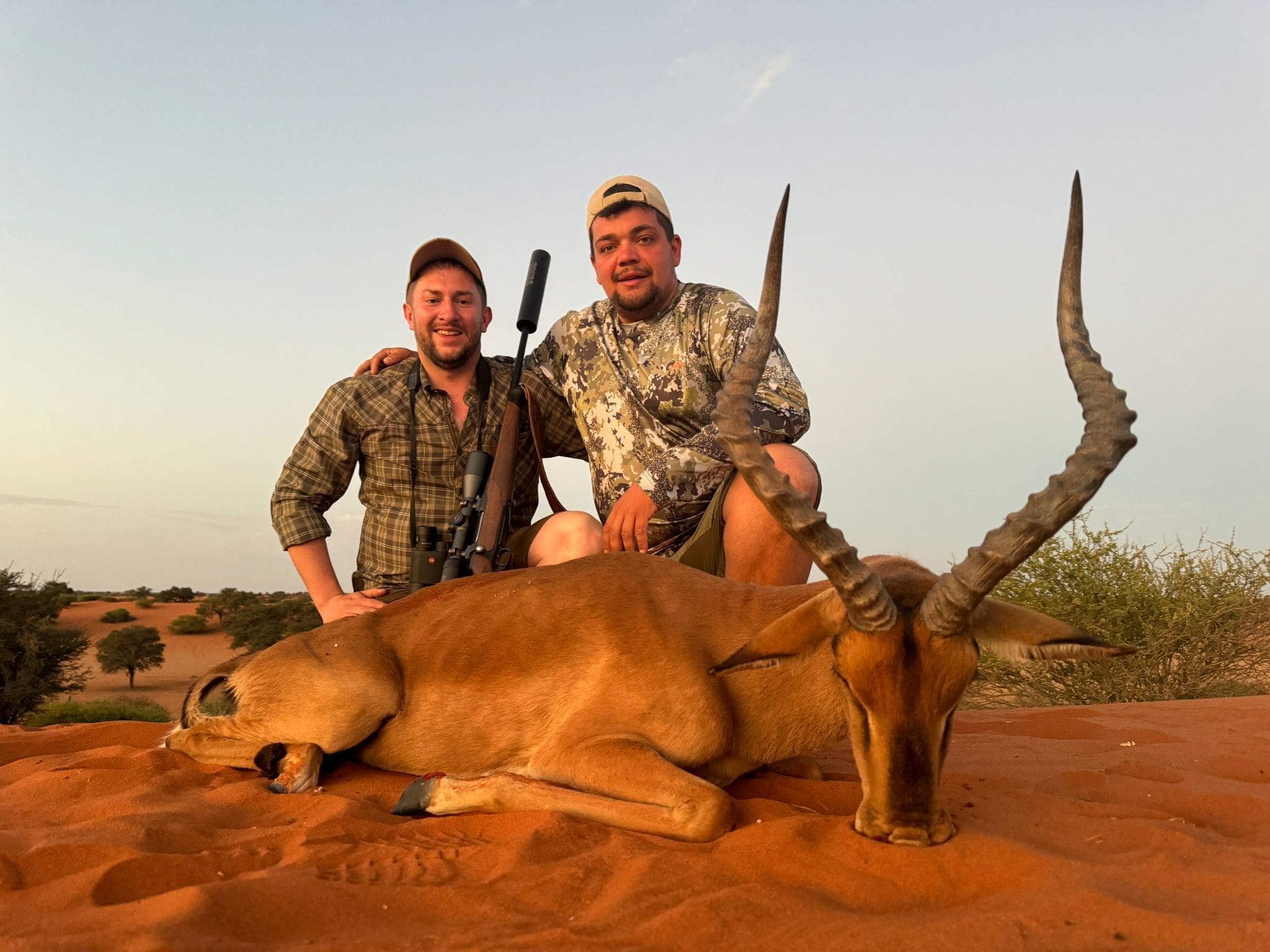
Arkadiusz Malarczyk "The trip to Namibia with The Hunting Hub exceeded my expectations. Impala, oryx, and other African species in their natural habitat, excellent logistics, and the vast knowledge of the local PHs. It was a real adventure of a lifetime, and definitely not my last trip to Africa."
Michael Schmiele - Germany
The roebuck hunt during the rut was perfectly timed and professionally guided. Great knowledge of the area and animal behavior resulted in real hunting opportunities. The Hunting Hub proved to be a reliable and highly professional outfitter.”
Jonathan - DaniaaJonathan - Denmark
An der von The Hunting Hub organisierten Drückjagd teilzunehmen war ein echtes Highlight. Hervorragende Organisation, hohe Sicherheitsstandards und außergewöhnlich viel Wild auf den Treiben
Peter Veerland - Netherlands
De muflonenjacht in Tsjechië met The Hunting Hub was een uitzonderlijke ervaring. Prachtige bergachtige jachtgebieden, sterke populaties muflons en zeer professionele begeleiding. Alles was perfect georganiseerd en het niveau van de jacht was bijzonder hoog. Absoluut een aanrader voor elke veeleisende jager
Contact
Contact us and ask about hunting with The Hunting Hub
Are you looking for an unforgettable hunting trip? Contact us via the form or by email/phone. We will listen to your needs and create the best offer for you.
We are here to answer your questions

Jakub Filip Jabłoński DE / ENG / POL
CEO of The Hunting Hub
 contact@thehuntinghub.com
 +48 570 731 282
 Warsaw, Poland
01
Fill out the form
02
We will call you back within 24 hours
03
We will discuss your requirements
04
We will present you with an offer
 We will go on an adventure
Animal species